
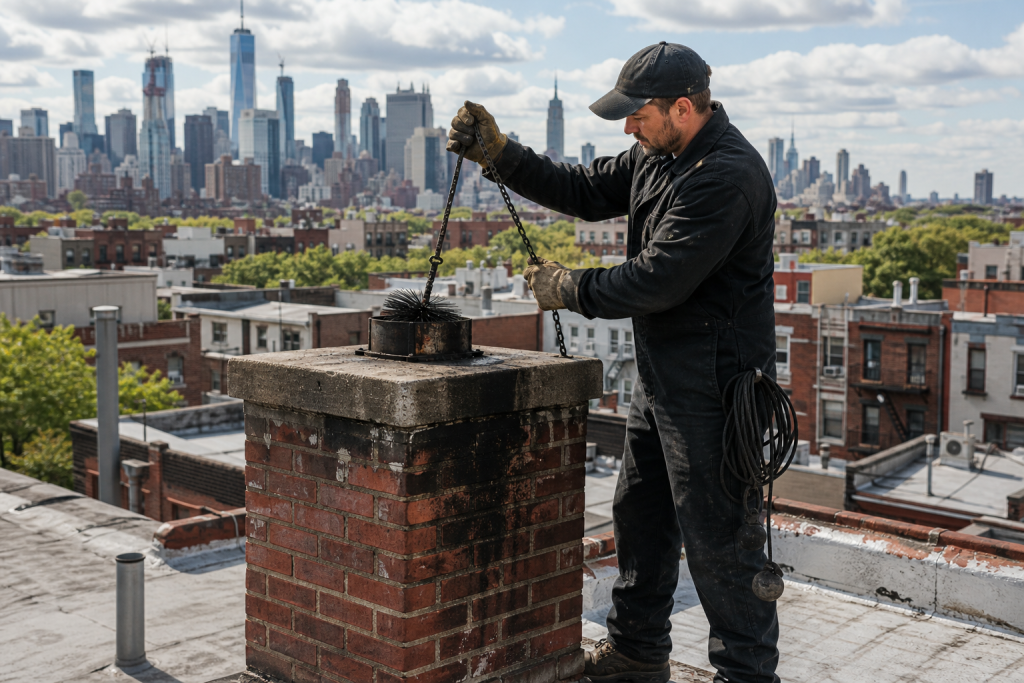
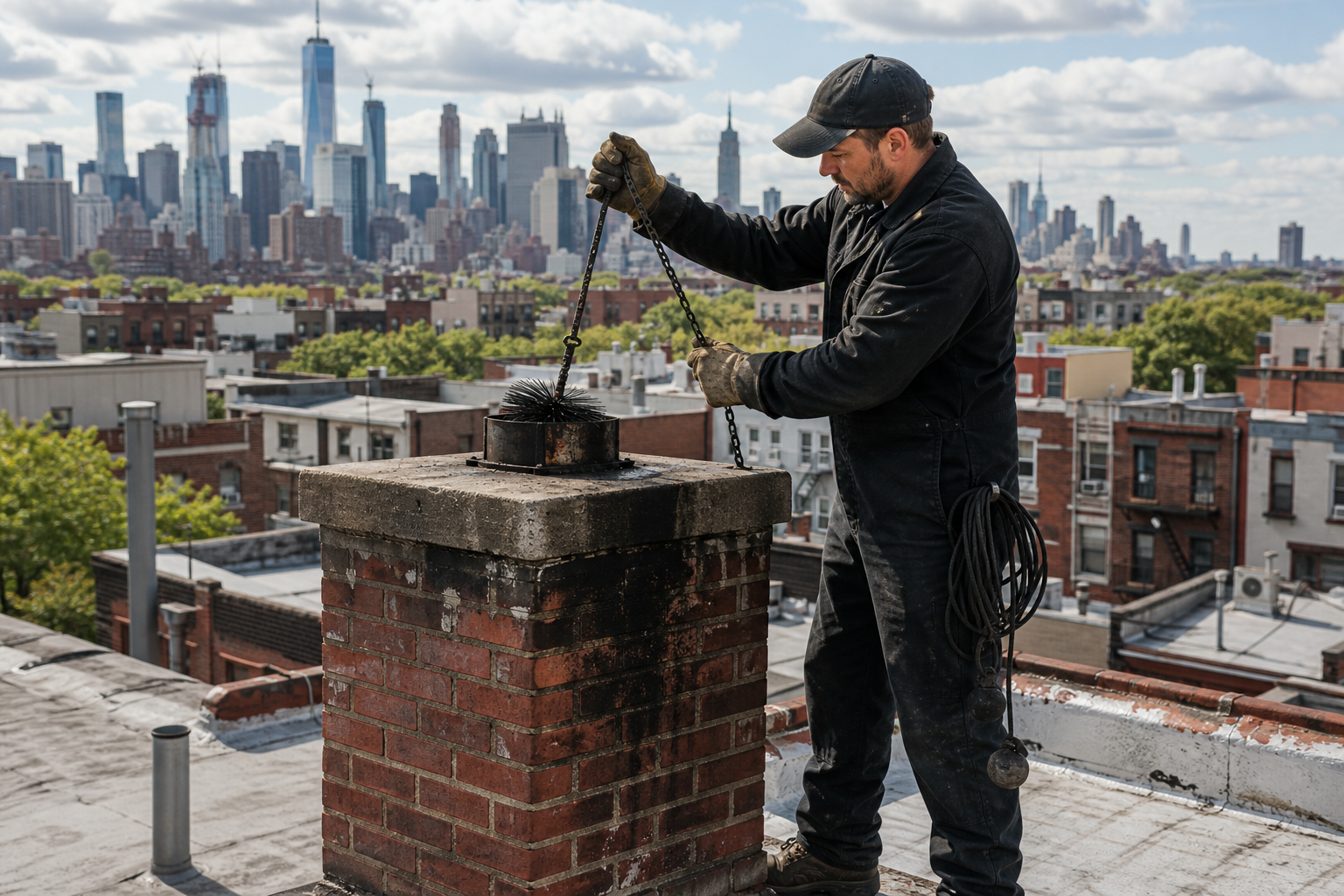
Emergency Chimney Cleaning & Sweep Near Me: What New York City Homeowners Should Do First
When you search “emergency chimney cleaning & sweep near me” in New York City, the first thing you should do is stop using your fireplace immediately and check for visible smoke backup, unusual odors, or debris falling into the firebox. Most emergency calls we get aren’t from sudden disasters—they’re from homeowners who ignored early warning signs for weeks. If you smell a strong, acrid odor when the fireplace isn’t running, or you notice black staining on the exterior masonry above your roofline, you’ve likely got a creosote buildup or blockage that needs professional attention before the next fire. If you’d rather not diagnose this yourself, call us at (833) 349-5892—Paul Torres leads every job personally, and we’ll give you a straight answer over the phone.
Here’s the surprising part most homeowners get wrong: the majority of “emergency” chimney situations in New York City are completely preventable. After 14 years and over 1,100 jobs across the five boroughs, we’ve found that the homeowners who call us in a panic on a Saturday night in January are usually the same ones who skipped their annual sweep. In a city where pre-war buildings share flues, where pigeons nest in uncapped crowns, and where a single blocked chimney can fill a Park Slope brownstone with carbon monoxide, “I’ll get to it next year” is a gamble that rarely pays off.
What Actually Counts as a Chimney Emergency in New York City?
Not every chimney problem needs a midnight call, but several situations demand immediate professional attention. Understanding the difference can save you from a dangerous fire or a costly false alarm.
True emergencies include:
- Smoke pouring back into your living space during or after a fire—this indicates a blocked flue, damaged liner, or negative air pressure issue that can escalate quickly
- Visible flames or glowing embers anywhere outside the firebox, including in the walls or attic, which signals a chimney fire spreading to structural elements
- A strong gas odor when your fireplace is off (for gas units), which could indicate a leak in the supply line or valve—evacuate and call the fire department first
- Chunks of tile or masonry falling into the fireplace, suggesting a collapsed flue liner that leaves combustible framing exposed to direct heat
- Sudden water pouring down the chimney during rain, especially in New York City’s older buildings where compromised crowns or flashing can cause rapid interior damage
What doesn’t count as an emergency? A small amount of soot on your hearth, a slightly drafty fireplace, or a bird you can hear but not see. These need attention, but they won’t endanger your family tonight.
In our experience across New York City neighborhoods from the Upper West Side to Astoria, the most common emergency we respond to is creosote-induced chimney fire risk. Creosote buildup accelerates when homeowners burn unseasoned wood or restrict airflow by closing glass doors too tightly—both common mistakes in apartment dwellers new to their first working fireplace. When we inspect chimneys in pre-war buildings, we regularly find glazing-stage creosote that’s hardened to a varnish-like finish; this requires rotary power sweeping, not a standard brush, and it’s never a DIY job.
The First 3 Things to Do Before You Call Anyone
If you suspect a chimney emergency, there are three immediate steps that protect your home and help us help you faster when you do call.
Step 1: Extinguish any active fire completely. Close the glass doors if you have them, but leave the damper open to allow smoke to escape upward. Never throw water on a fireplace fire—thermal shock can crack masonry and create steam that spreads smoke through your home.
Step 2: Document what you’re seeing. Use your phone to photograph any debris in the firebox, staining on exterior walls, or smoke patterns inside. In New York City’s dense housing market, many of our clients are renters or new owners who don’t know their chimney’s history; photos help us assess whether you’re dealing with a maintenance backlog or a sudden failure.
Step 3: Check your carbon monoxide detector. A blocked chimney can push deadly CO back into living spaces without any visible smoke. If your detector is alarming, evacuate immediately and call 911 before you call us. We’ve responded to calls in Brooklyn Heights and Harlem where the real emergency wasn’t the chimney itself—it was the silent gas buildup that preceded any visible symptom.
Once you’ve secured your space, call (833) 349-5892. Paul Torres answers directly when he’s between jobs, and if we’re already on a roof in Tribeca or headed to a liner replacement in Forest Hills, we’ll tell you honestly when we can be there. No dispatchers, no scheduling games.
Why “Near Me” in New York City Means Something Different
Searching “near me” in New York City isn’t like searching it in a suburban market. Distance matters less than expertise with your specific building type. A sweep who excels with freestanding suburban chimneys may be lost in a 1920s co-op with a shared flue, a offset flue, or a decorative but non-functional chimney that’s been incorrectly used for venting.
We’ve worked on chimneys in:
- Pre-war brownstones and townhouses with original terra cotta flue liners that have shifted over decades of freeze-thaw cycles
- Mid-century high-rises where fireplaces were added as amenities and vent through complex mechanical systems
- Converted industrial lofts with newly installed wood stoves venting through walls that were never designed for combustion exhaust
- Landmarked buildings where exterior modifications require LPC approval, making quick fixes impossible without proper planning
The “nearest” sweep by GPS may not be the right sweep for your building. When we get calls from homeowners in Gramercy Park or the West Village, we ask about building age, fuel type, and any recent renovations before we even schedule. That fifteen-minute conversation prevents the all-too-common scenario where a technician arrives unprepared and tries to sell a superficial sweep for a problem that actually requires liner repair or crown rebuilding.
If you’re in Gramercy Park specifically, we’ve documented the particular challenges of that neighborhood’s chimney stock—tight roof access, ornate masonry that demands careful protection, and a concentration of buildings from the 1840s-1900s with original construction that needs respectful handling.
What Emergency Chimney Cleaning Actually Costs in New York City
Homeowners deserve straight numbers, not “call for a quote” runaround. Here’s what emergency chimney work typically runs in the New York City market based on our 14 years of pricing:
| Service | Typical Range | What Affects Price |
|---|---|---|
| Standard emergency sweep (creosote blockage, accessible flue) | $280 – $420 | Height of chimney, degree of buildup, after-hours scheduling |
| Rotary power sweeping (glazed creosote, heavy buildup) | $450 – $650 | Flue diameter, number of flues, equipment access |
| Chimney cap or crown repair (water intrusion emergency) | $380 – $1,200 | Material (stainless vs. copper), accessibility, extent of damage |
| Flue liner inspection with video scan | $180 – $280 | Usually bundled with sweep; standalone for insurance documentation |
| Full liner replacement (collapsed or perforated liner) | $2,800 – $5,500 | Liner material (we specify DuraFlex or Olympia Chimney for most NYC applications), height, number of appliances served |
These are real 2024-2025 ranges for the New York City market, not teaser rates. We don’t bait-and-switch with “$99 sweeps” that turn into $800 upsells. When Paul Torres gives you a number over the phone based on your description, it’s the number you’ll see on the invoice, adjusted only if we find something genuinely unexpected—and we’ll show you the video evidence before any additional work proceeds.
Most emergency sweeps in Manhattan and Brooklyn fall in the $280-$420 range. The higher end typically applies to buildings above four stories where we need specialized rigging, or to situations where we’ve got to work around your building’s narrow service windows.
How to Vet an Emergency Chimney Sweep in 10 Minutes
In an emergency, you don’t have days to research. Here’s the rapid vetting process we recommend to every caller, even those who don’t hire us:
- Ask who will actually be on your roof. If the answer is “one of our technicians” or they can’t name the person, you’re dealing with a subcontractor model. Paul Torres leads every job personally—that’s our standard, and it should be yours.
- Request proof of insurance and bonding. Don’t accept “we’re fully insured” as an answer. Ask for the certificate of insurance to be emailed before work begins. Chimney work involves heights, combustion systems, and your home’s structural integrity; this isn’t optional.
- Check recent reviews for emergency response specifically. A company with 1,000 five-star reviews for routine maintenance may be unresponsive at 7 PM on a Saturday. Look for reviews that mention timing, communication, and whether the owner or a named technician handled the job.
- Ask about their scope. Can they repair what they find, or will they sweep and refer? A sweep-only operation that discovers a cracked crown or failed liner will leave you scrambling for a second contractor. From the sweep to the rebuild, we handle it—no referral runaround.
- Verify material brands. Professional-grade liners, caps, and repair materials matter. We specify Famco for certain venting applications and Copperfield for crown repair products because these are the brands chimney professionals trust, not the generics you’ll find at hardware stores.
We pulled a job in Bay Ridge last month where the previous “sweep” had installed a big-box chimney cap that was already rusting after one winter. The homeowner paid twice: once for the cheap fix, once for us to remove it and install proper stainless hardware. Ten minutes of vetting would have caught that.
When to Call a Pro vs. What You Can Safely Check Yourself
We’re not here to scare you into calling for every hiccup. There are legitimate self-checks that help you triage:
You can safely:
- Visually inspect the firebox for cracks, debris, or animal nesting material (use a flashlight, don’t reach in blindly)
- Check that your damper opens and closes fully—if it’s stuck, note whether it’s stuck open or closed
- Walk outside and look at your chimney crown and cap from ground level; missing or damaged components are visible
- Verify your carbon monoxide detector has fresh batteries and is positioned according to manufacturer guidance
Never attempt:
- Roof access to inspect the crown or flashing yourself—New York City’s building heights and parapet configurations make this genuinely dangerous without proper fall protection
- DIY creosote removal with chemical logs or wire brushes—improper technique damages flue liners and can actually ignite hardened deposits
- Disassembly of gas fireplace components—leaks aren’t always detectable by smell, and incorrect reassembly creates explosion risk
- Any work on a chimney that’s actively smoking back or showing signs of fire—evacuate and call professionals
We’ve seen the aftermath of well-meaning DIY attempts in Washington Heights and Long Island City. The $200 you “save” can become $3,000 in liner replacement when a homeowner’s wire brush cracks terra cotta that’s already brittle from a century of temperature cycling.
Related Services in New York City
Emergency cleaning sometimes reveals deeper issues. If your inspection shows structural damage, water intrusion, or a failed liner, chimney repair may be necessary before your fireplace is safe to use again. For gas fireplace malfunctions or insert issues, our fireplace services cover diagnostics and repair. And if you’re realizing your chimney hasn’t been properly maintained, Legacy Chimney Cleaning New York handles everything from routine maintenance to complete system rebuilds.
What happens when you call
- 1
A real person answersNo phone trees — you reach a local pro.
- 2
You get an upfront price rangeHonest numbers before anyone is dispatched.
- 3
A background-checked tech heads outLicensed & insured, dispatched right away.
- 4
You approve before work beginsNothing starts until you say go.
The Bottom Line
Emergency chimney situations in New York City demand immediate safety steps, honest assessment, and a technician who understands your specific building—not just the nearest available appointment. The key takeaways: stop using the fireplace at first warning sign, check your CO detector, document what you see, and vet whoever you call for owner accountability and full-service capability.
Paul Torres has led over 1,100 jobs across New York City’s diverse chimney stock, from routine sweeps in modern condos to full liner rebuilds in century-old masonry. If you’re in New York City and need help right now, Legacy Chimney Cleaning New York offers free estimates—call (833) 349-5892. We’ll tell you honestly whether you’re facing a true emergency or something that can wait for scheduled service, and we’ll get there with the right materials and the experience to fix it properly the first time.
Frequently Asked Questions
Emergency chimney cleaning in New York City typically costs between $280 and $420 for a standard sweep, with rotary power sweeping for heavy creosote buildup running $450 to $650. After-hours scheduling, building height above four stories, and difficult roof access can push costs toward the higher end. Call (833) 349-5892 for an exact quote based on your specific building—estimates are free.
We often can, depending on current job locations and the nature of your emergency. Paul Torres leads every job personally, so our scheduling is transparent—if we’re on a rebuild in Queens and you’re in Manhattan, we’ll tell you the realistic arrival window rather than promise what we can’t deliver. True emergencies involving active fire risk or CO exposure get priority. Call (833) 349-5892 and we’ll give you a straight answer.
It depends entirely on what we find during inspection. Minor cracks in a sound terra cotta liner can sometimes be addressed with HeatShield resurfacing, which is significantly less expensive than full replacement. However, a liner that’s shifted, collapsed, or has multiple fractures typically requires replacement with a stainless steel system—we specify DuraFlex or Olympia Chimney for most New York City applications. We’ll show you the video scan and explain both options honestly. Call (833) 349-5892 to schedule an inspection.
Smoke backing into your living space, visible flames outside the firebox, a strong gas odor, or a carbon monoxide alarm all demand immediate professional response. Chunks of masonry in the fireplace or sudden water intrusion during rain also need same-day attention. Soot accumulation, minor drafting issues, or a bird you can hear but not see should be addressed promptly but don’t require emergency rates. When in doubt, call us at (833) 349-5892—we’ll help you triage over the phone at no charge.
Written by Paul Torres, Owner & Lead Technician at Legacy Chimney Cleaning New York, serving New York City since 2012.
Need Chimney Cleaning Help?
Call Legacy Chimney Cleaning New York — licensed & insured, here with fast after-hours help in New York.
(833) 349-5892