
Fast, Reliable Chimney Cleaning & Sweep Across Little Ferry
Chimney cleaning and sweep service in Little Ferry, NJ typically costs $180–$420 depending on inspection level and creosote buildup, and most appointments are completed same-day. Paul Torres leads every job personally, bringing 14 years of hands-on chimney expertise to homes throughout the 07643 ZIP code.
We’re familiar with Little Ferry’s streets from Main Street down to the Bergen Turnpike corridor, and we know the borough’s housing stock inside out — those 1940s Cape Cods near the Hackensack River, the post-war ranches off Liberty Street, and especially the homes that went through elevation after Sandy. That local knowledge matters because a chimney in Little Ferry isn’t just a chimney. It’s a system that survived floodwater, maybe got jacked up on a new foundation, and now breathes differently than it did when it was first built. When you call Legacy Chimney Cleaning New York at (833) 349-5892, you’re getting a technician who’s swept and inspected chimneys in this specific floodplain terrain — not a subcontractor learning your neighborhood on the fly.
Why Legacy Chimney Cleaning New York Is Little Ferry’s Preferred Chimney Cleaning & Sweep Company
Our Chimney Cleaning & Sweep team has built a reputation in Little Ferry by solving problems that generic sweeps miss entirely. We’ve got 1,119 verified reviews averaging 4.7 stars, and that volume comes from doing the full job — not just running a brush up the flue and calling it done.
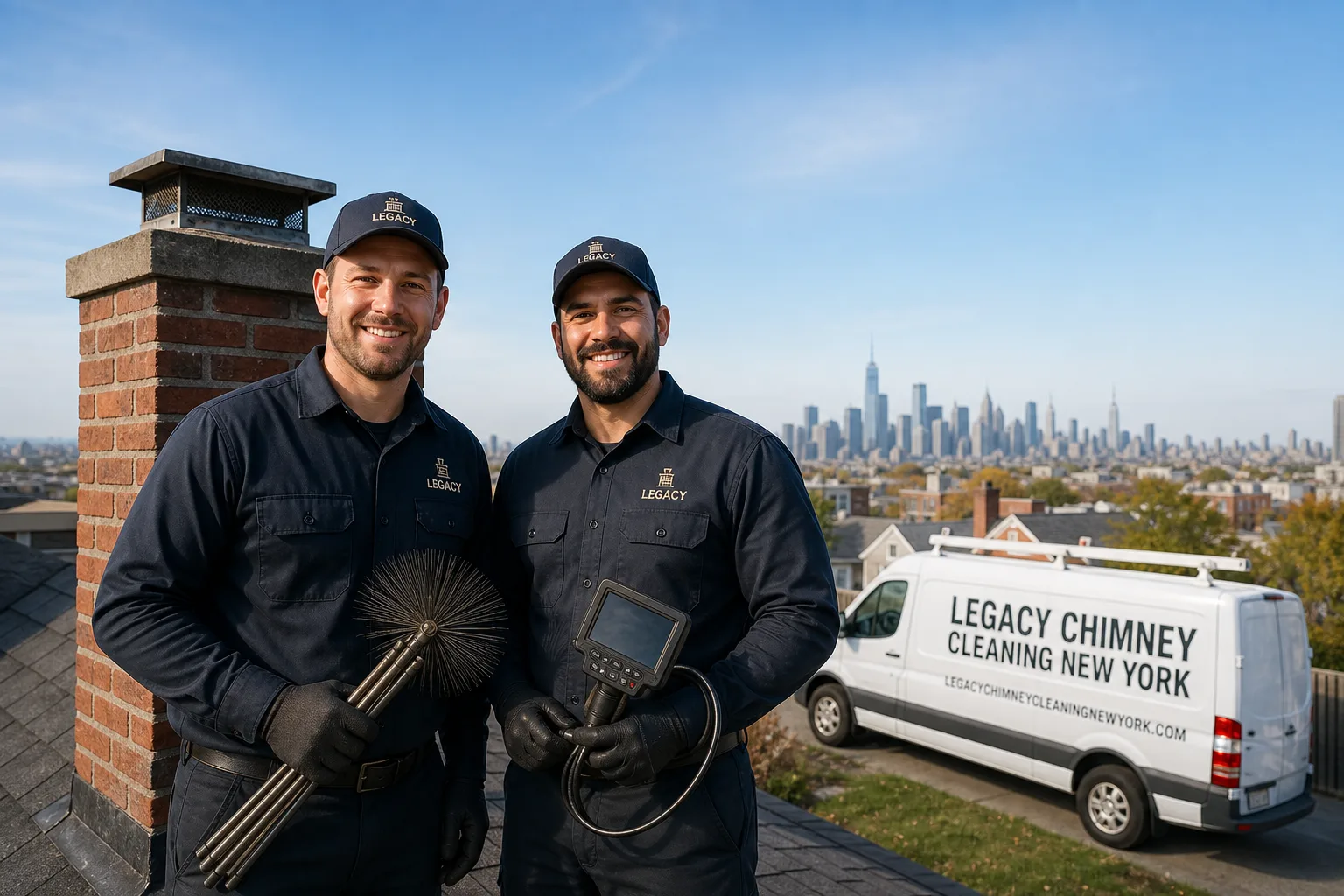
Paul Torres serves as both Owner and Lead Technician on every visit. That means the person answering your questions is the same one on your roof, accountable for what gets found and what gets fixed. For Little Ferry homeowners dealing with post-Sandy chimney complications, that direct accountability matters — there’s no passing the buck to a crew you never met.
We typically respond to Little Ferry calls within the same day or next morning, depending on routing from our New York City base. We know the local traffic patterns across the Route 46 corridor and the Bergen Turnpike, so we give realistic arrival windows and stick to them.
Most importantly, we understand how Little Ferry’s near-sea-level position on the Hackensack River floodplain affects chimney performance year-round. The persistent ground moisture, the freeze-thaw cycles that hit harder here than in higher Bergen County towns, the sediment left behind in smoke chambers after Sandy — we’ve seen it, we’ve documented it, and we’ve developed specific protocols for it.
Our Chimney Cleaning & Sweep Services in Little Ferry
Level 1 Inspection
A Level 1 inspection is the baseline for any chimney in active use, and for many Little Ferry homes built in the 1950s and 1960s, it’s the starting point that reveals whether deeper investigation is needed. We examine readily accessible portions of the chimney exterior, interior, and flue, checking for obstructions, creosote buildup, and basic structural integrity. In Little Ferry’s humid climate, we pay particular attention to mortar condition at the chimney base where ground moisture wicks upward — a problem that accelerates dramatically through Bergen County’s 30–40 annual freeze-thaw cycles.
Level 2 Inspection
Level 2 inspections are where our Little Ferry expertise pays off most clearly. This camera-assisted internal examination is mandatory when a property changes hands, after any chimney fire or operational change, and — critically for this ZIP code — after structural alterations like foundation elevation. We’ve performed dozens of Level 2 inspections in Little Ferry homes elevated post-Sandy, and the pattern is consistent: original clay-tile liners misaligned with new roof penetrations, compromised chase flashing, and draft performance that doesn’t match the pre-elevation baseline. Our Level 2 inspection documents these conditions with video evidence so you understand exactly what you’re dealing with before any repair work begins.
Creosote Removal
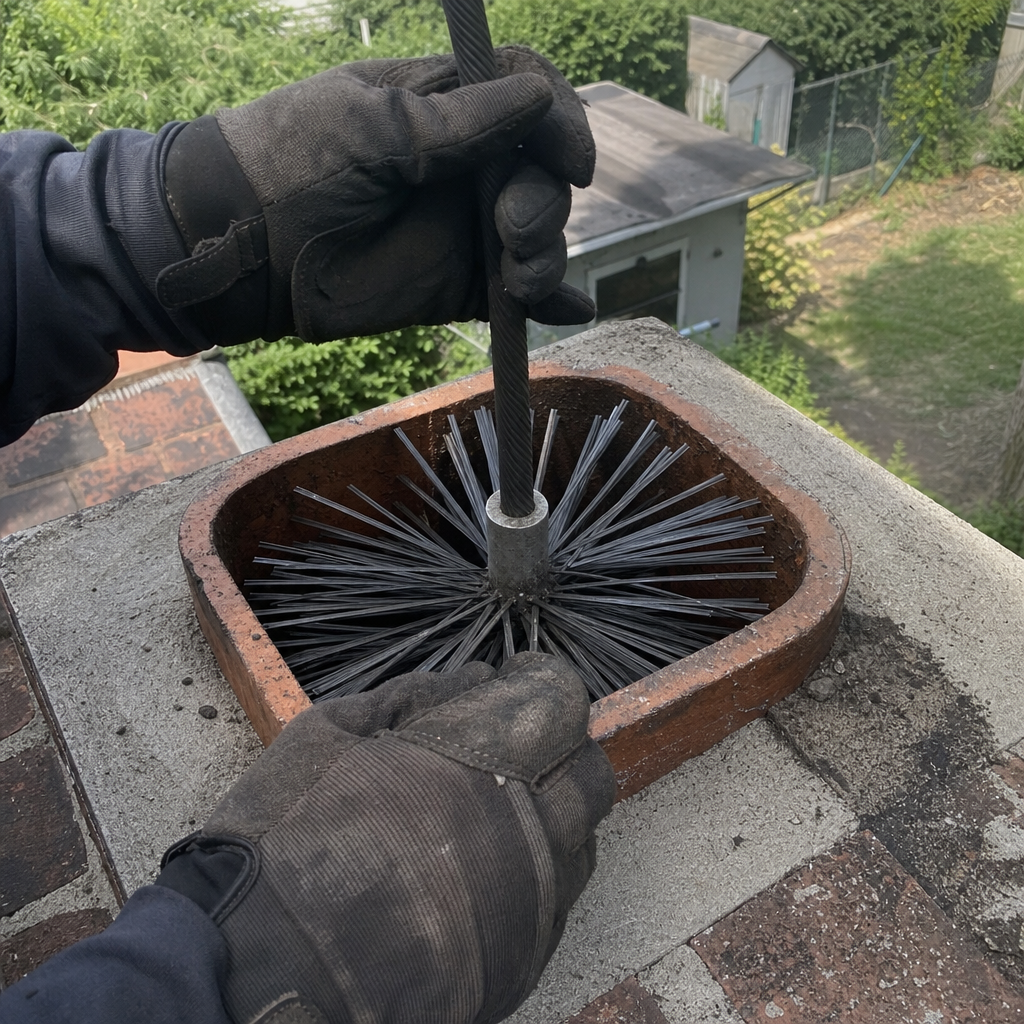
Creosote accumulation is the leading cause of chimney fires nationwide, and Little Ferry’s older masonry chimneys — many with original unlined or clay-tile-lined flues — provide ideal conditions for buildup when homeowners burn improperly seasoned wood or restrict airflow. But here’s where local knowledge separates a proper sweep from a superficial one: in flood-affected Little Ferry homes, we’ve found compacted silt and sediment deposits behind dampers that look and behave like creosote but require completely different removal techniques. Our creosote removal service includes sediment differentiation — checking for Sandy-era deposits that restrict draft and trap moisture. We use professional-grade brushes and vacuum systems sized for the narrower flue dimensions common in Little Ferry’s mid-century housing stock.
Soot Removal
Soot accumulation reduces draft efficiency and can signal incomplete combustion, which in Little Ferry’s already moisture-challenged chimneys compounds the risk of masonry deterioration. Our soot removal process addresses the full flue length plus the smoke chamber, firebox, and damper assembly — the areas where we most often find post-flood sediment infiltration in this borough. For gas fireplace systems common in newer Little Ferry renovations, we use specialized soot removal protocols that protect sensitive burner assemblies while restoring proper venting capacity.
Annual Sweep
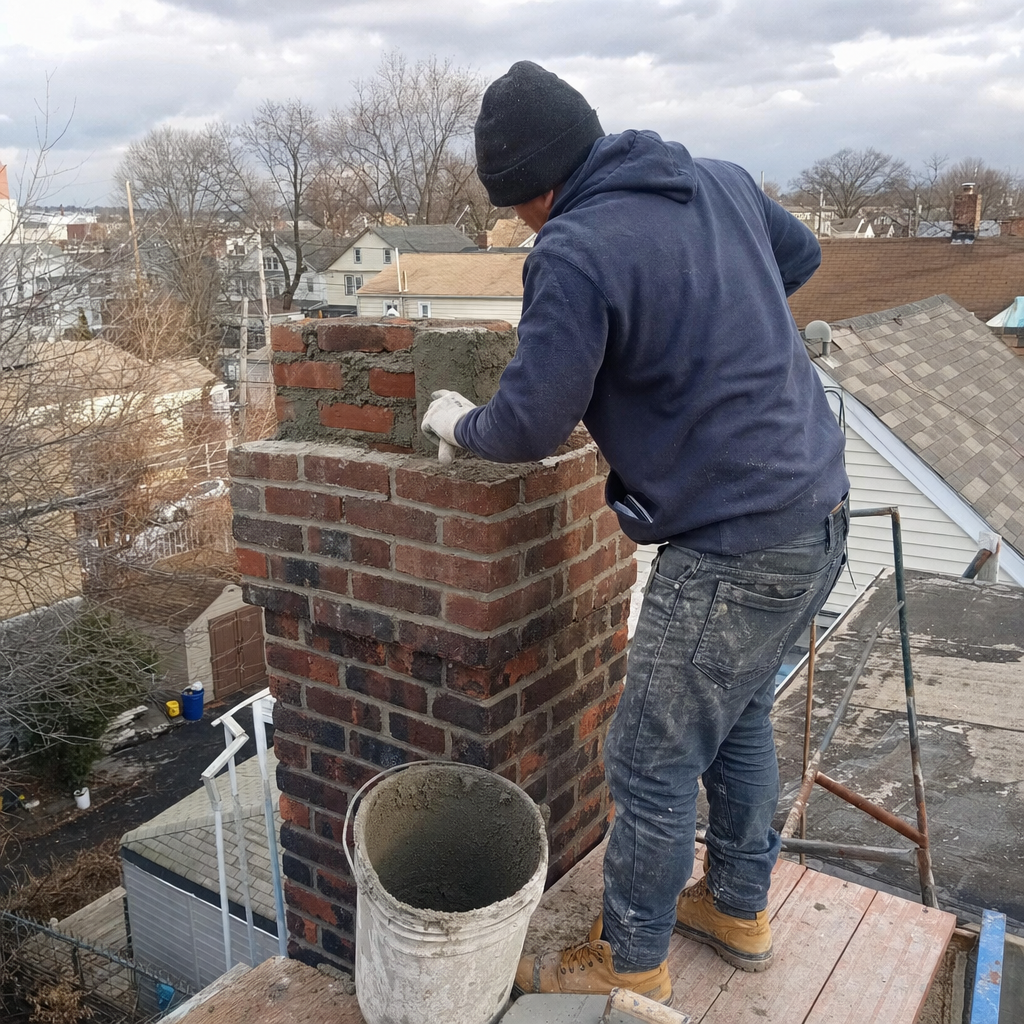
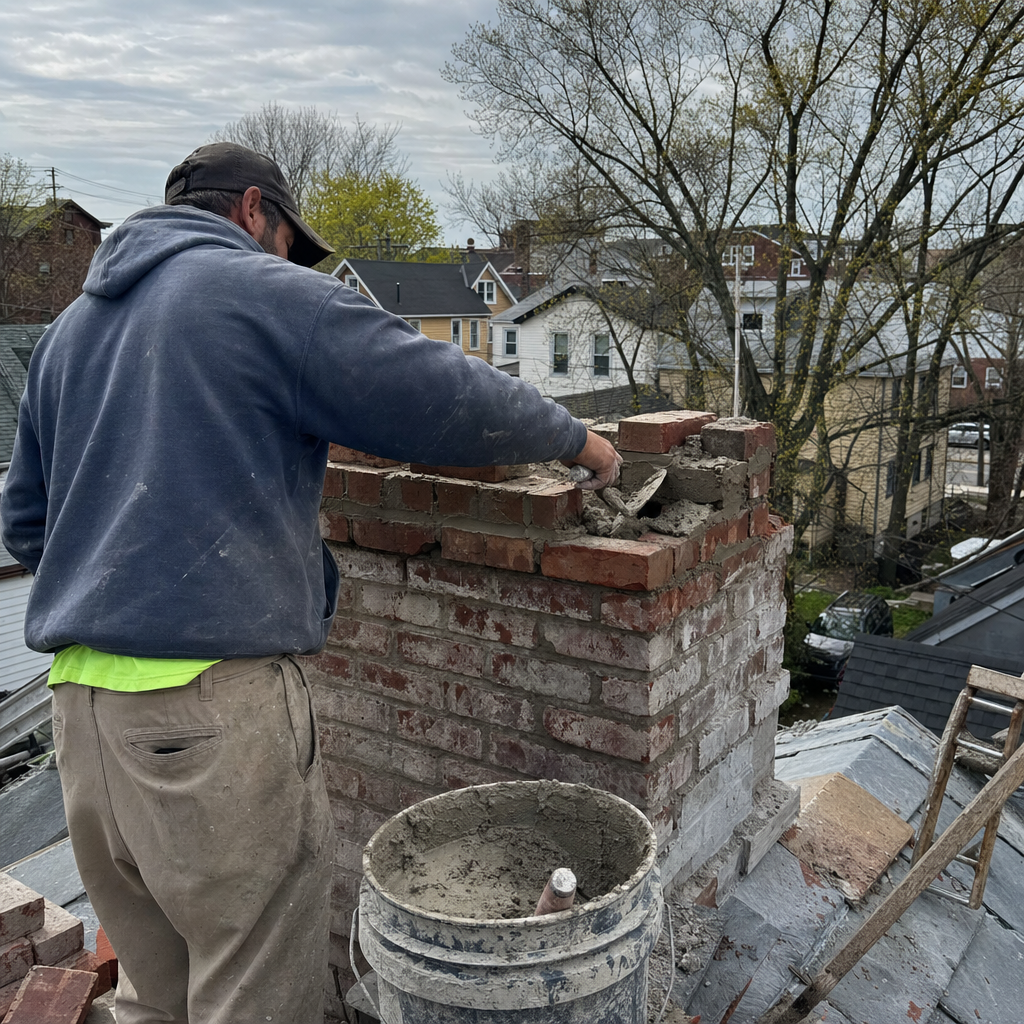
An annual sweep is the single most effective preventive measure for chimney safety and efficiency, and in Little Ferry’s specific conditions, it’s not optional — it’s essential. The combination of high ambient humidity, freeze-thaw cycling, and potential flood-related structural compromise means that a chimney that passed inspection 18 months ago may have developed significant new issues. Our annual sweep service includes full debris removal, damper function testing, and written condition documentation. For Little Ferry homeowners with wood-burning systems, we schedule these sweeps in spring after the burning season, when creosote is freshest and easiest to remove completely.
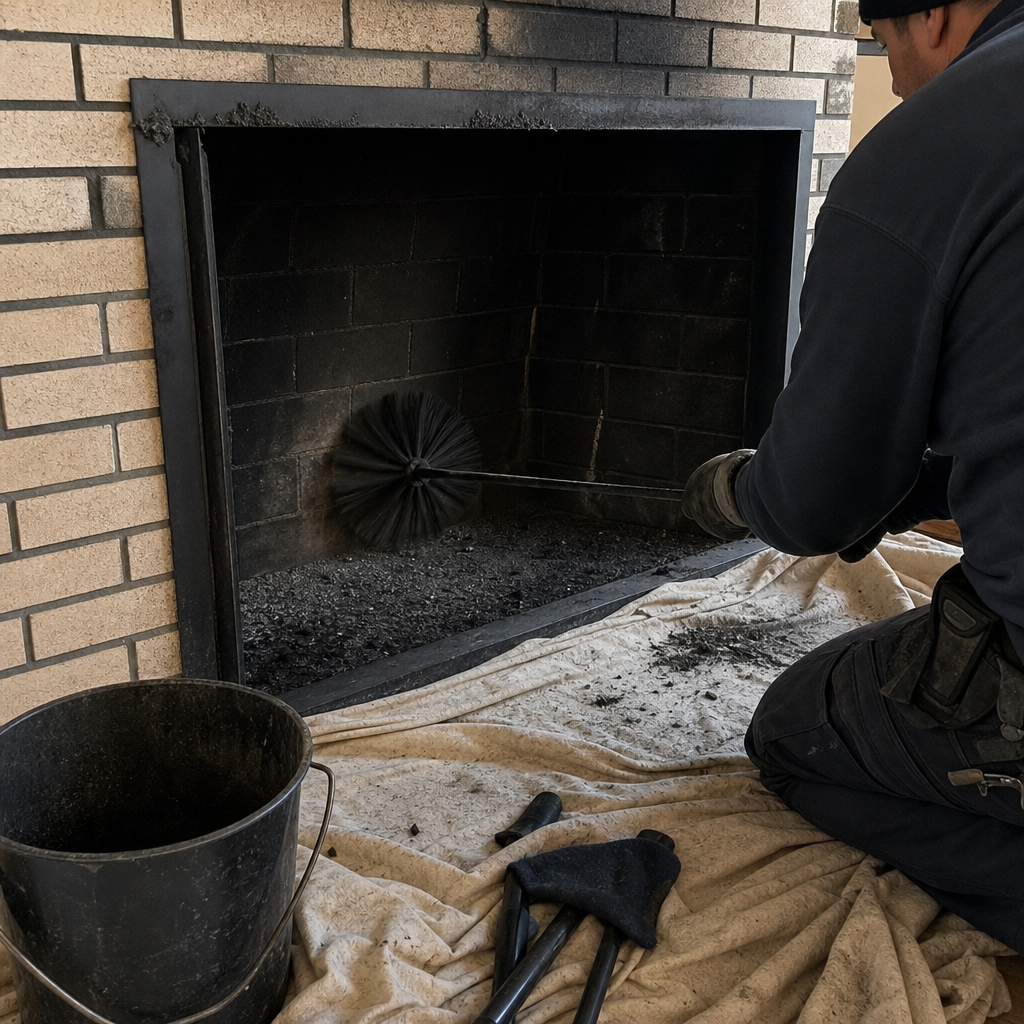
Fireplace Cleaning
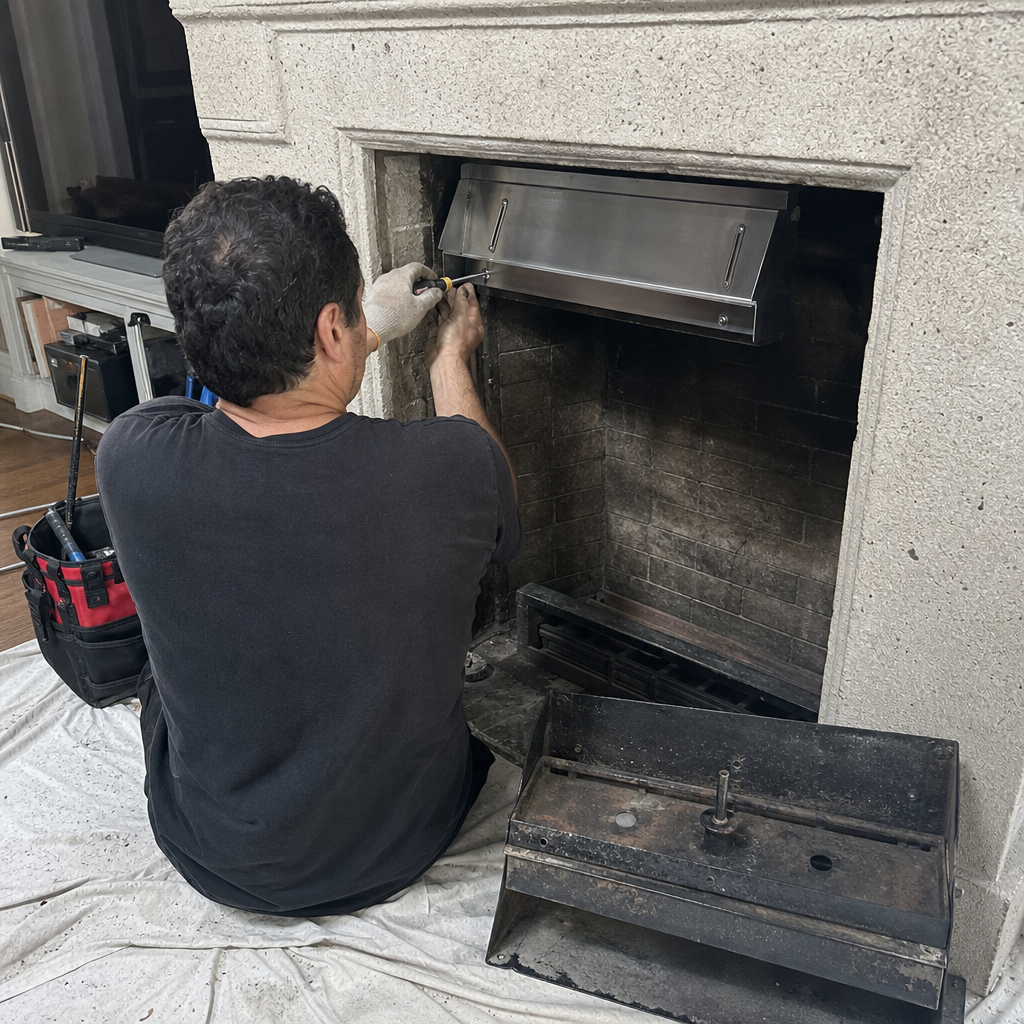
Fireplace cleaning extends beyond the flue to the firebox, hearth, and facing materials — areas where Little Ferry’s moisture issues manifest as efflorescence, spalling brick, and deteriorated mortar. We clean and assess these components as part of our comprehensive service, flagging conditions that threaten structural integrity or create pathways for carbon monoxide intrusion.
What happens when you call
- 1
A real person answersNo phone trees — you reach a local pro.
- 2
You get an upfront price rangeHonest numbers before anyone is dispatched.
- 3
A background-checked tech heads outLicensed & insured, dispatched right away.
- 4
You approve before work beginsNothing starts until you say go.
Trusted Brands We Service in Little Ferry
We specify professional-grade materials on every applicable job — no big-box substitutes that fail prematurely in demanding conditions. For liner installations and restorations in Little Ferry’s older homes, we work with HeatShield for cerfractory flue resurfacing and DuraFlex for stainless steel liner systems that handle the draft demands of post-elevation chimney configurations. For caps, dampers, and ventilation hardware, we source Famco and Copperfield components designed for coastal-adjacent moisture exposure. We maintain working knowledge of these product lines’ specifications so we can recommend the right solution for your chimney’s specific condition — not whatever happens to be in the truck that day.
Common Chimney Cleaning & Sweep Problems We See in Little Ferry Homes
- Post-elevation draft failure. Homes raised on new foundations after Sandy often left original chimneys with altered height-to-roof ratios that don’t generate adequate updraft. We measure actual draft performance against NFPA standards and correct with liner modifications or chimney extension when needed.
- Sediment-masquerading-as-creosote. On blocks that took Sandy floodwater, fine silt carried into smoke chambers compacts behind dampers over years, restricting airflow and trapping moisture while looking superficially like creosote. Our sediment check protocol identifies these deposits and removes them without damaging original components.
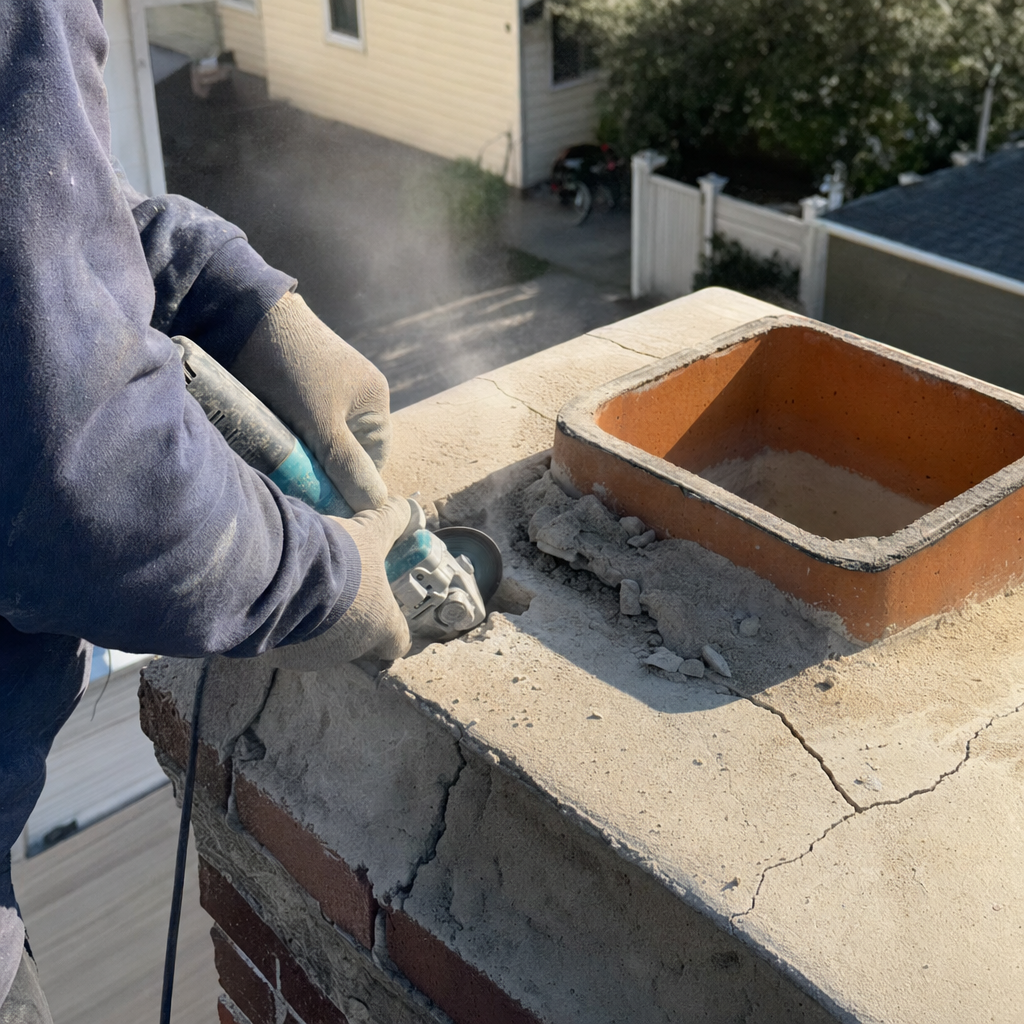
- Freeze-thaw mortar destruction. Little Ferry’s position on the Hackensack River floodplain produces persistently high ground moisture that wicks into chimney masonry from the base upward; Bergen County’s freeze-thaw cycles then fracture saturated mortar joints faster than in higher-elevation neighboring towns like Hackensack or Paramus. We document spalling progression and recommend intervention before structural compromise requires full rebuild.
- Misaligned clay-tile liners in elevated homes. The original liner system in a pre-Sandy chimney often doesn’t align properly with the new roof penetration after elevation, creating gaps where creosote accumulates and water intrudes. Our camera inspection catches these misalignments that visual inspection misses.
Pricing for Chimney Cleaning & Sweep in Little Ferry, NJ
Here’s what chimney cleaning and sweep services actually cost in the Little Ferry market:
| Service | Typical Range in Little Ferry |
|---|---|
| Level 1 Inspection with basic sweep | $180–$260 |
| Level 2 Inspection (camera-assisted) | $280–$420 |
| Creosote removal — light to moderate buildup | $200–$320 |
| Creosote removal — heavy glazed buildup | $340–$480 |
| Annual sweep (returning customers) | $160–$220 |
| Fireplace cleaning (firebox, hearth, facing) | $140–$200 |
| Sandy sediment check and removal | $120–$180 add-on |
Several factors push costs toward the higher end in Little Ferry specifically: post-elevation chimneys often require additional access time, heavy creosote from years of deferred maintenance is common in inherited properties, and flood-related sediment removal adds labor that standard sweeps don’t account for. We provide upfront written estimates before beginning work — no open-ended billing. Call (833) 349-5892 for a free estimate specific to your chimney’s condition.
We Also Serve Cities Near Little Ferry
Our service radius covers the full Bergen County chimney market, including Ridgefield Park to the north, Bogota to the west, Hasbrouck Heights to the southwest, and Ridgefield across the Hackensack River. Each of these communities has distinct housing stock and chimney characteristics — Ridgefield Park’s older colonials, Bogota’s mixed-era development, Hasbrouck Heights’ mid-century ranches — and we adjust our inspection and cleaning protocols accordingly.
Serving Little Ferry, NJ — Our Local Coverage Area
We’re based in the Little Ferry area and know this community well. Use the map below to see our service coverage — if you’re nearby, we can almost certainly help.
FAQs — Chimney Cleaning & Sweep in Little Ferry
The elevation changed your chimney’s height relative to the new roofline, reducing the stack effect that drives natural draft. Many post-Sandy elevations in Little Ferry left original chimneys too short for their new roof configuration, or misaligned the flue with the roof penetration. We measure actual draft pressure and can install a properly sized liner or extend the chimney to restore adequate airflow. Call (833) 349-5892 to schedule a Level 2 inspection that documents exactly what’s happening in your system.
If your home took floodwater in October 2012 and the chimney wasn’t fully disassembled and cleaned afterward, sediment check is strongly advisable. Fine silt from Hackensack River flooding carried into smoke chambers and settled behind dampers; over years this compacts into airflow-restricting deposits that mimic creosote but resist standard brush removal. We’ve found these deposits in homes on South Court Street and throughout the flood-affected blocks — they’re a legitimate condition specific to this ZIP code’s history. Call for an inspection that includes sediment differentiation.
Annual sweeping is the minimum for active wood-burning systems in Little Ferry, and we recommend every 6–12 months depending on burn frequency. The borough’s high ambient humidity from the Hackensack River floodplain accelerates creosote absorption into porous masonry and promotes faster deterioration of flue surfaces between cleanings. Gas systems should undergo annual inspection with cleaning as indicated by debris accumulation or venting performance. Call (833) 349-5892 to set up a recurring annual schedule.
We specify DuraFlex stainless steel liners for full relining jobs and HeatShield cerfractory resurfacing for structurally sound clay flues with surface deterioration. Both are professional-grade products specified by chimney professionals nationwide, not retail substitutes. For Little Ferry’s 1940s–1960s masonry chimneys, liner selection depends on flue dimensions, existing damage extent, and post-elevation draft requirements — we size and specify after camera inspection, not before. Call for a Level 2 inspection and written liner recommendation.
Yes — roofline leaks in elevated homes are typically caused by flashing that wasn’t properly modified for the new roof-to-chimney geometry, or by chase deterioration where the chimney now exits at a different height. We repair or replace flashing, assess chase condition, and verify that water intrusion hasn’t damaged interior components. On South Court Street, we swept a 1950s ranch whose chimney had been elevated on a new foundation after Sandy. The original clay-tile liner was misaligned with the new roof penetration, causing poor draft and water intrusion. We installed a HeatShield liner to restore proper airflow and seal the compromised chase. Call (833) 349-5892 for inspection and repair estimate — estimates are free.
Written by Paul Torres, Owner at Legacy Chimney Cleaning New York, serving Little Ferry and surrounding Bergen County communities since 2011.