
Fast, Reliable Chimney Liner & Rebuild Across Richmond Hill
Chimney liner installation and rebuild in Richmond Hill typically runs $2,800–$6,500 depending on whether we’re relining a single flue or rebuilding a shared party-wall stack, and Paul Torres leads every job personally. If your Richmond Hill home was built before 1930, there’s a strong chance your gas boiler is venting into a flue never designed for it — and in these tight Victorian rows, that misrouting can backdraft into your neighbor’s living space. We’ve spent 14 years tracing flues through Richmond Hill’s century-old masonry, and our Chimney Liner & Rebuild team knows which 1890s coal chutes became gas vents and which ones didn’t. Call (833) 349-5892 — we’re usually on-site in Richmond Hill within 24 hours.
Why Legacy Chimney Cleaning New York Is Richmond Hill’s Preferred Chimney Liner & Rebuild Company
Our reputation in Richmond Hill was built one flue at a time. We’ve relined chimneys from 114th Road to Hillside Avenue, and homeowners here leave the same feedback: Paul Torres showed up, traced the problem to its source, and fixed it without the runaround. That accountability shows in our numbers — 1,119 verified reviews averaging 4.7 stars, earned across every chimney condition imaginable.
Richmond Hill’s housing stock demands this level of expertise. The semi-detached and row homes built between 1895 and 1925 share party-wall chimneys with soft lime mortar that’s been through a century of freeze-thaw cycles. A crew that doesn’t understand which flue serves which appliance can create a carbon monoxide hazard that crosses property lines. Paul Torres leads every job personally, so the person making that call is the same one accountable for it.
We carry the professional-grade materials to finish Richmond Hill jobs without delay — DuraFlex stainless liners, HeatShield refractory mortar, Gelco termination kits. No waiting on parts, no second trips. From the sweep to the rebuild, it’s one crew, one call.
Our Chimney Liner & Rebuild Services in Richmond Hill
Stainless Steel Liner Installation
For Richmond Hill’s century-old flues, we specify DuraFlex 316Ti stainless steel liners — the alloy that handles the acidic condensate produced by modern gas boilers running six months straight through NYC’s heating season. These liners come in diameters from 3″ to 8″, and we size them to the appliance, not to whatever clay tile happened to be installed in 1910. In Richmond Hill’s 11418 ZIP, we most commonly install 5″ and 6″ liners for gas-fired boilers originally connected to 7″ or 8″ coal flues — the downsizing is critical for proper draft.
Installation means dropping the liner from the top, insulating with high-temperature wrap where clearance to combustibles is tight (common in these Victorian rowhouse walls), and terminating with a proper rain cap and storm collar. We see too many Richmond Hill chimneys where a previous installer skipped the termination kit — condensate pools, brick spalls, and the homeowner calls us two winters later for a partial rebuild that could’ve been avoided.
Flexible Liner Systems
Not every Richmond Hill flue is straight. The offset flues in these 1890s homes — built to dodge floor joists and party walls — need a flexible liner that can navigate bends without creasing or creating condensate traps. We use Olympia Chimney’s flexible stainless systems for offsets up to 45 degrees, and we video-scan before and after to confirm the liner seats properly through every turn.
Here’s the catch: flexible liners are only as good as the flue they enter. We won’t drop a flex liner into a Richmond Hill chimney until we’ve verified which flue channel actually serves your appliance. On a row of attached 1899 brick homes on 111th Street, we found a homeowner’s gas boiler had been connected to what was originally the coal ash-out flue, not the heating flue, causing chronic backdrafts into the neighbor’s kitchen. We installed a DuraFlex stainless steel liner into the correct heating flue, sealed the abandoned ash-out flue, and rebuilt the shared crown with stainless steel chase covers to prevent future cross-contamination. That’s the difference between a liner installer and a flue specialist.
Liner Replacement & Relining
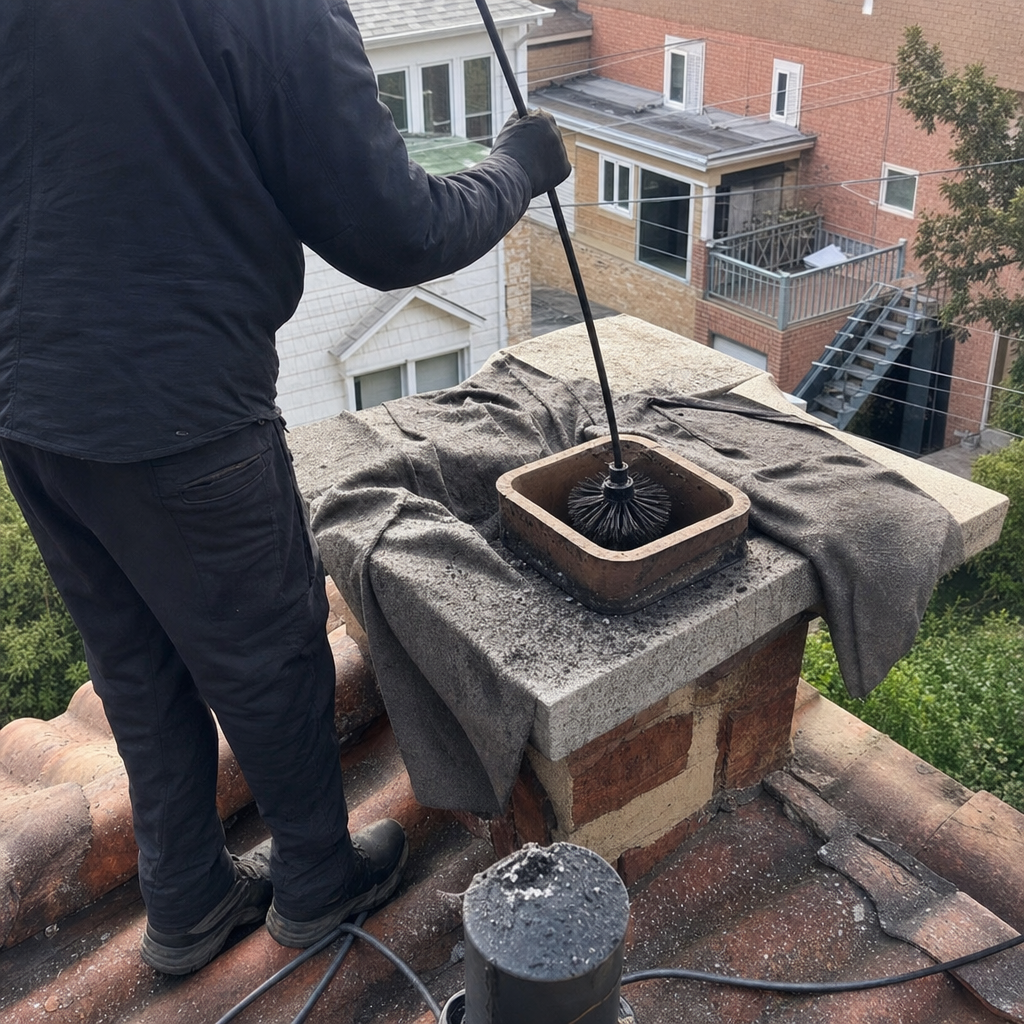
Relining in Richmond Hill isn’t maintenance — it’s correction. Most of these homes have cycled through coal, oil, and gas conversions, and each fuel switch typically left the original unlined or undersized clay-tile flue intact. That clay tile is cracked, shifted, or missing entirely in the chimneys we inspect here. We remove what we can, drop a properly sized stainless liner, and pack the annular space with insulating mix where code requires it.
The critical step: tracing every flue from appliance to termination. Richmond Hill’s original late-Victorian coal chutes were often repurposed as gas vent flues during mid-century conversions, meaning our techs must confirm we are relining the correct channel — a step that avoids dangerous mis-routing in party-wall systems. We’ve seen contractors skip this, install a flexible liner blind, and accidentally vent a gas boiler into an abandoned coal flue. In a shared chimney, that’s not just a failed inspection — it’s a carbon monoxide risk to the attached unit.
Partial Chimney Rebuild
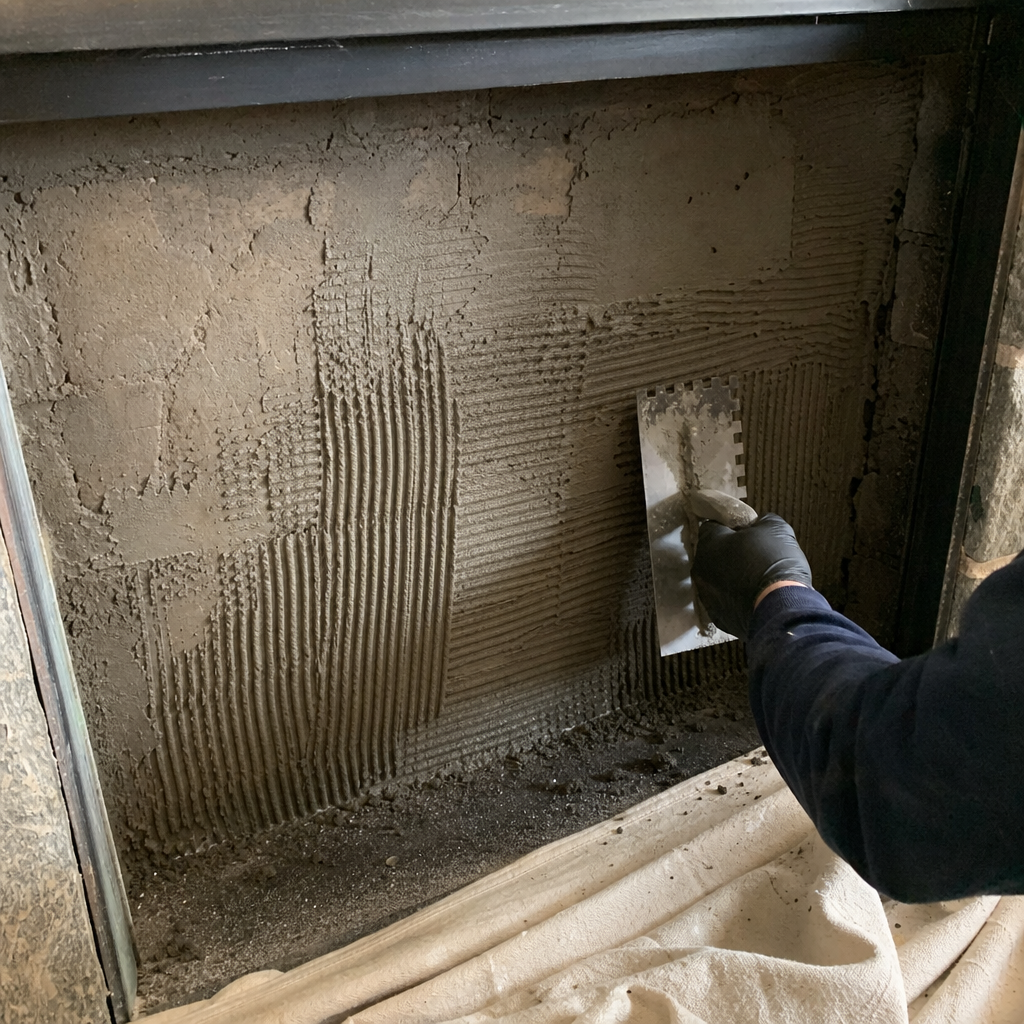
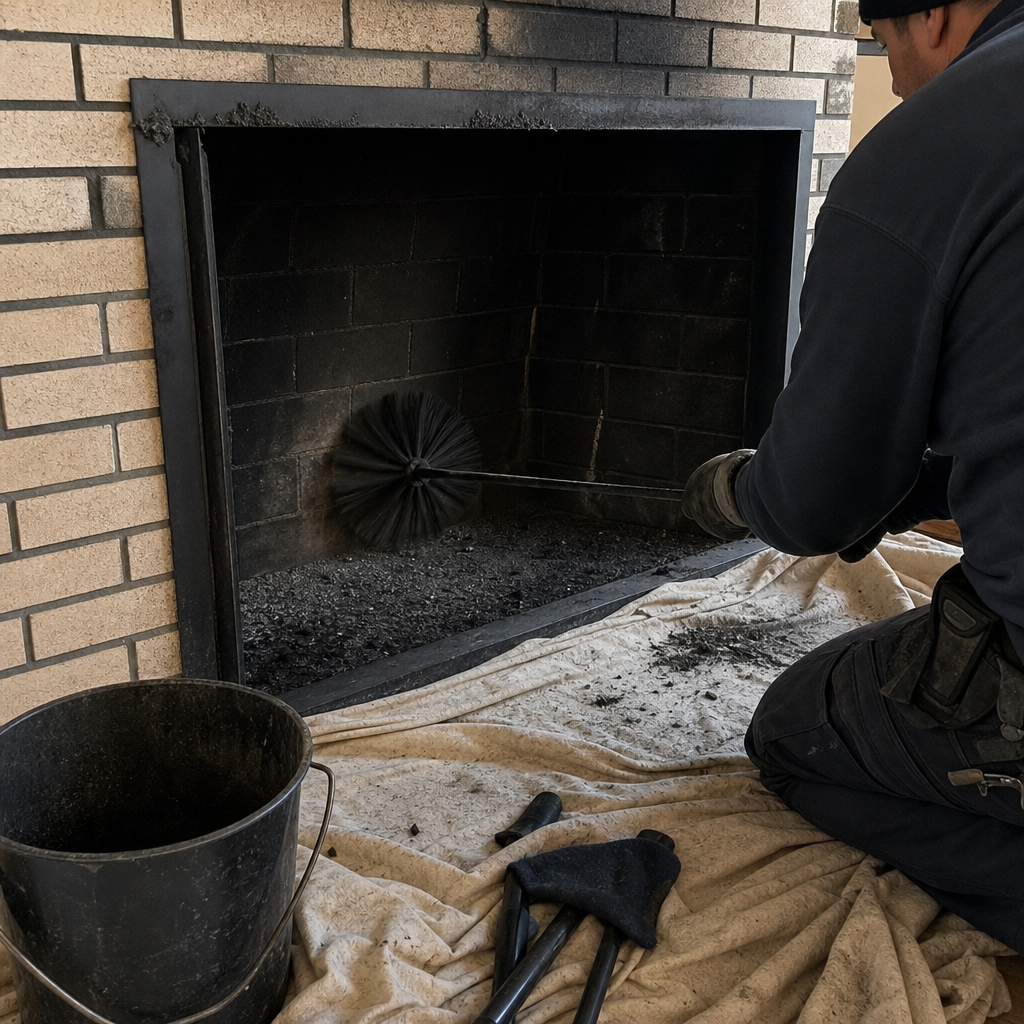
When the crown has spalled through, the shoulder courses are loose, or the wythe separation has opened between flues, a liner alone won’t save the chimney. We rebuild from the roofline up using flexible high-alkali refractory mortar formulated for Richmond Hill’s ancient soft brick — standard Type N mortar cracks and fails after one freeze-thaw cycle on this substrate. Paul Torres specs the rebuild: new crown with proper slope and drip edge, rebuilt shoulders, stainless steel chase cover if the chimney is exposed above the roofline.
Partial rebuilds are common on Richmond Hill’s pre-1930 homes because the original soft lime mortar has deteriorated severely over a century of freeze-thaw cycling. Annual freeze-thaw exploits every existing crack, making mortar joint failure and crown deterioration a near-universal finding here. We address it once, address it right, and the chimney lasts another generation.
What happens when you call
- 1
A real person answersNo phone trees — you reach a local pro.
- 2
You get an upfront price rangeHonest numbers before anyone is dispatched.
- 3
A background-checked tech heads outLicensed & insured, dispatched right away.
- 4
You approve before work beginsNothing starts until you say go.
Trusted Brands We Service in Richmond Hill
We don’t source from big-box shelves. Every Richmond Hill job gets professional-grade materials specified by chimney professionals: DuraFlex for stainless liners, HeatShield for refractory resurfacing, Gelco for caps and termination hardware, and Famco for custom chase covers and flashing. We stock the common liner diameters and crown mixes locally, so a Richmond Hill homeowner isn’t waiting two weeks for a 6″ flex kit while their boiler vents into a cracked flue. Olympia Chimney’s flexible systems round out our offset-capable inventory. These are the brands that other chimney companies use — we just install them with 14 years of field knowledge behind every cut and connection.
Common Chimney Liner & Rebuild Problems We See in Richmond Hill Homes
- Gas boiler venting into the wrong flue channel. Richmond Hill’s mid-century fuel conversions often connected appliances to the nearest thimble opening without verifying which flue it served. We trace every flue before we quote — relining the wrong channel vents exhaust into your neighbor’s home or an abandoned ash-out.
- Standard mortar used on soft-brick rebuilds. Contractors unfamiliar with Richmond Hill’s 1890s masonry use rigid Portland-based mortar that cracks and spalls within one winter. We spec flexible high-alkali refractory mortar that moves with the brick through freeze-thaw cycles.
- Missing or improper termination on new liners. A stainless liner without a proper rain cap and storm collar allows condensate to pool at the base, accelerating spalling of 120-year-old brick and destroying the new liner’s bottom section. We terminate every installation to manufacturer spec.
- Shared party-wall flues with compromised separation. In Richmond Hill’s attached row homes, the wythe between flues can crack or shift, allowing exhaust to cross from one unit to another. We video-inspect for separation integrity before any liner installation.
Pricing for Chimney Liner & Rebuild in Richmond Hill, NY
Here’s what we’ve quoted on Richmond Hill jobs over the past three seasons:
| Service | Typical Range in Richmond Hill |
|---|---|
| Single-flue stainless steel liner (5″–6″, standard height) | $2,800–$4,200 |
| Flexible liner with offset navigation | $3,400–$5,100 |
| Liner replacement with crown rebuild | $4,500–$6,500 |
| Partial rebuild (roofline up, soft-brick compatible) | $3,200–$5,800 |
| Party-wall chimney with dual flue separation repair | $5,500–$8,200 |
What moves the number: chimney height, number of flues, whether we need to rebuild before relining, and access (tight Richmond Hill alleys and shared driveways can add setup time). We don’t quote blind — every estimate starts with a level II inspection and video scan. Call (833) 349-5892 to schedule; estimates are free, and Paul Torres conducts the inspection himself.
We Also Serve Cities Near Richmond Hill
Our crew works the full corridor — Kew Gardens to the north with its pre-war co-ops, Briarwood and its 1950s brick garden apartments, Woodhaven‘s dense Victorian rows similar to Richmond Hill’s own, and Ozone Park to the south where the housing stock shifts to 1920s frame and stucco. Same owner-led service, same day-trip radius, same phone: (833) 349-5892.
Serving Richmond Hill, NY — Our Local Coverage Area
We’re based in the Richmond Hill area and know this community well. Use the map below to see our service coverage — if you’re nearby, we can almost certainly help.
FAQs — Chimney Liner & Rebuild in Richmond Hill
You need a level II inspection with video scan to trace the flue from appliance to termination; we perform this on every Richmond Hill job before quoting any liner work. Richmond Hill’s original late-Victorian coal chutes were often repurposed as gas vent flues during mid-century conversions, and the only way to confirm your boiler is in the right channel is to run a camera and drop a smoke pellet. Call (833) 349-5892 and Paul Torres will trace it personally — estimates are free.
Minor spalling (under 1/4″ depth, no structural cracks) can sometimes be resurfaced with HeatShield CrownCoat; deeper spalling with exposed aggregate or cracked shoulder courses requires partial rebuild with proper slope and drip edge. In Richmond Hill, we find that crowns on pre-1930 homes have usually deteriorated past patching — the freeze-thaw cycling here is too aggressive for superficial repairs to last. We’ll show you the camera footage and give you both options. Call (833) 349-5892 for an inspection.
Yes, particularly if the party-wall wythe between flues is cracked or if your neighbor’s contractor sealed a flue that your appliance still uses. In Richmond Hill’s attached row homes, we inspect both sides of shared chimneys before any liner work to prevent cross-contamination or backdraft reversal. If your neighbor’s reline was recent and you’re noticing draft changes or odors, call (833) 349-5892 — we’ll assess the interaction between the two systems.
A properly sized stainless liner works better than the original coal flue for a gas boiler, because gas appliances require smaller diameters for correct draft — we typically downsize from 7″–8″ coal flues to 5″–6″ liners in Richmond Hill homes. The liner also seals cracks and gaps in the existing clay tile, preventing exhaust leakage into wall cavities or adjacent units. Sizing is critical: too large and you get condensation, too small and you get spillage. Paul Torres calculates every installation to the appliance manufacturer’s spec.
5″ or 6″ diameter, depending on the boiler’s BTU input and vent height; we most commonly install 5″ liners for mid-efficiency gas boilers and 6″ for higher-input units in Richmond Hill’s three-story row houses. The original 7″ or 8″ coal flue is almost always oversized for modern gas equipment, which is why straight relining without downsizing creates condensation and draft problems. We measure, we calculate, we install to spec. Call (833) 349-5892 for a sizing assessment.
Ready to get your Richmond Hill chimney liner or rebuild assessed by a technician who understands 1890s flue systems? Call Legacy Chimney Cleaning New York at (833) 349-5892 for a free estimate. Paul Torres leads every inspection personally.
Written by Paul Torres, Owner at Legacy Chimney Cleaning New York, serving Richmond Hill and Queens since 2010.