
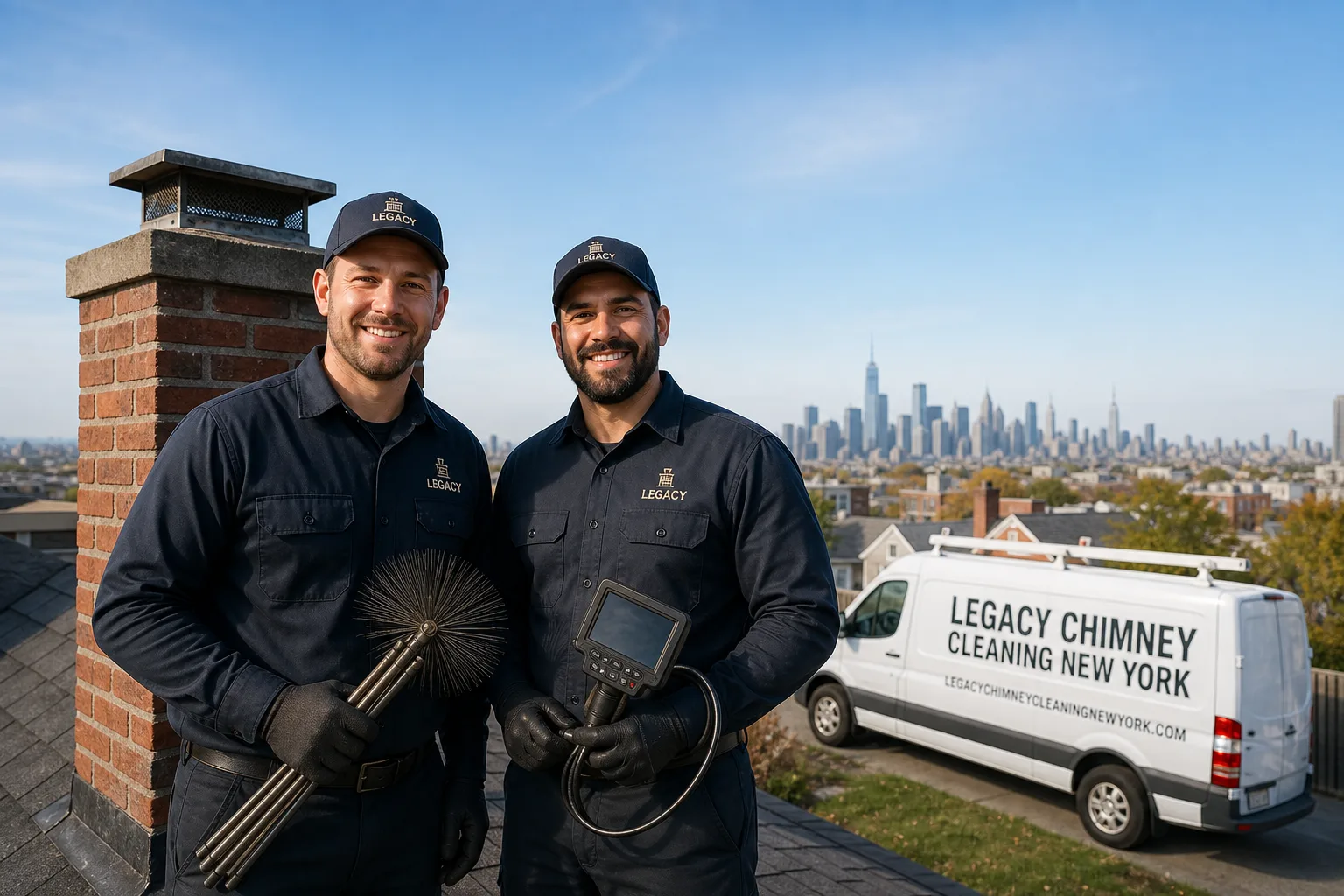
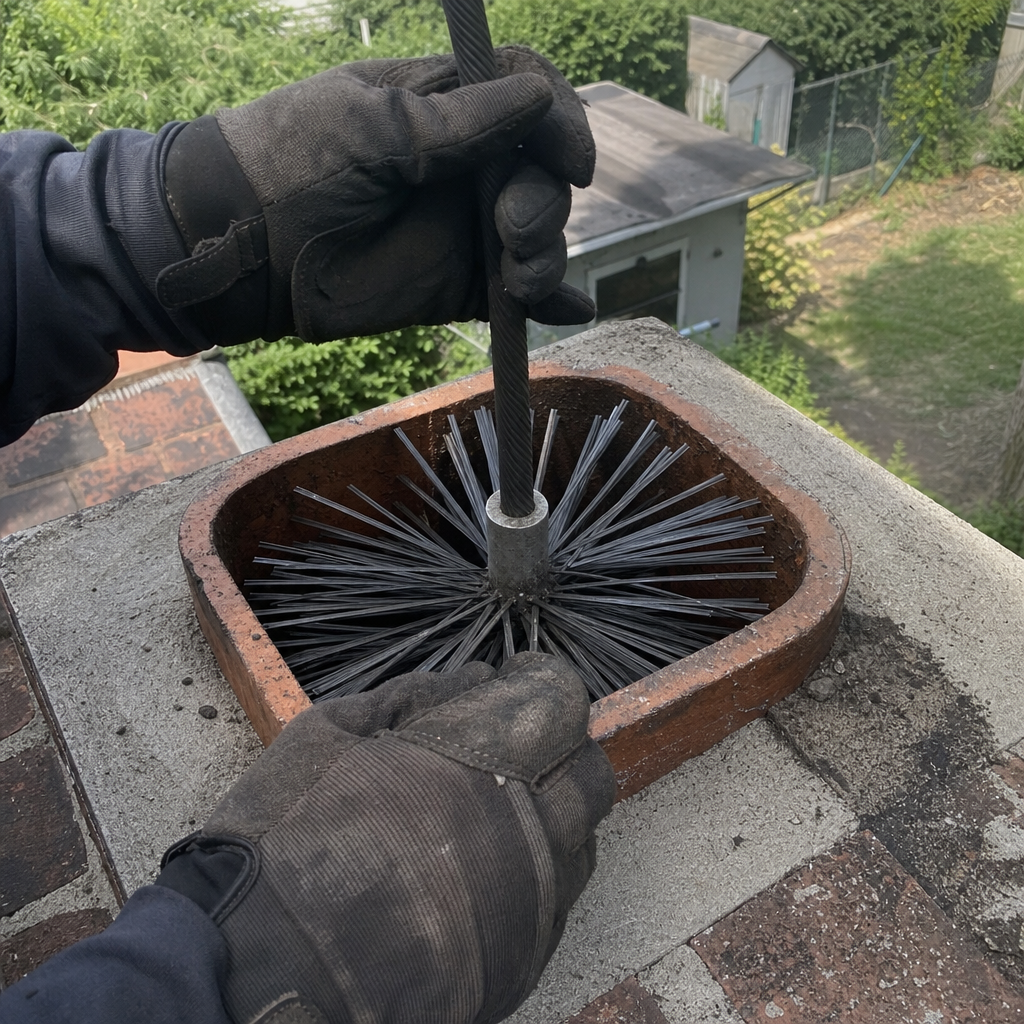
Fast, Reliable Chimney Repair Across Fort Lee
Chimney repair in Fort Lee, NJ typically costs between $450 and $2,800 depending on scope, with most boiler-flue relining jobs in the city’s high-rise towers running $1,800–$4,500. Paul Torres leads every job personally, and we usually diagnose and quote same-day for Fort Lee calls to 07024. We’ve worked the towers along Hudson Terrace, the mid-rise buildings near Lemoine Avenue, and the older brick two-families clustered around the George Washington Bridge approach — so we know the specific headaches Fort Lee chimneys present.
Fort Lee isn’t like the rest of Bergen County. The city sits on the exposed rim of the Palisades, facing the Hudson River with a wall of 1960s–1980s high-rises that converted from oil to gas decades ago. Those conversions left original clay-tile flues that are oversized, unlined, and deteriorating under acidic condensate. Our Chimney Repair team handles everything from single-family mortar repointing to full liner installs in 30-story boiler flues. If you’re seeing moisture in your mechanical room, smelling combustion odors, or dealing with a failed CO inspection, call (833) 349-5892. We’ll come out, assess it honestly, and tell you exactly what needs to happen.
Why Legacy Chimney Cleaning New York Is Fort Lee’s Preferred Chimney Repair Company
We’ve earned 1,119 verified reviews averaging 4.7 stars — and plenty of them come from Fort Lee building managers and homeowners who’ve dealt with the specific nightmare of gas-converted boiler flues in vertical buildings. Paul Torres doesn’t send subcontractors. He’s the owner, and he’s the lead technician on every job. That means when we quote a DuraFlex liner install for your Hudson Terrace tower, the person pricing it is the same person climbing the roof to measure flue dimensions and wind exposure.
Our response time to Fort Lee is typically same-day or next-morning because we know the urgency: a backdrafting boiler flue in a high-rise isn’t a slow-burn problem. It’s a CO hazard with occupied units stacked twenty stories high. We understand the Palisades wind dynamics that cause negative pressure at rooftop terminations. We’ve diagnosed spillage in buildings where the previous company simply installed a bigger fan and called it fixed. We don’t do band-aids.
Fourteen years in this trade means we’ve seen the gas-conversion liner gap before — hundreds of times. We know which Fort Lee buildings were built with 12″×12″ clay-tile flues meant for #2 oil, and we know exactly what NJ code requires to bring them into compliance for natural gas exhaust. That’s not theoretical knowledge. It’s field experience.
Our Chimney Repair Services in Fort Lee
Flue Liner Installation
This is the service we perform most often in Fort Lee, and it’s not close. The city’s high-rise stock — towers along Palisade Avenue, Hudson Terrace, and near the GWB — was built with oil-fired boilers venting through massive clay-tile flues. When those buildings converted to gas in the 1980s and 1990s, nobody relined the flues. Gas exhaust is cooler, wetter, and more acidic than oil exhaust. It condenses on the porous clay tile, soaks into the mortar, and literally dissolves the flue from the inside out. The result: CO spillage, moisture damage in elevator shafts, and failed inspections.
We install stainless steel liner inserts — DuraFlex 316Ti and HeatShield systems — sized precisely for the boiler’s BTU output and insulated to maintain adequate flue temperature. In a Hudson Terrace tower built in 1972, we found the original oil-to-gas conversion had left an oversized, unlined brick chimney. The boiler flue was backdrafting acid condensate into the mechanical room. We installed a DuraFlex 316Ti liner, sized and insulated it correctly, and the building now passes its annual CO inspection with zero issues.
Chimney Rebuilding
When the flue damage has progressed past the point of relining — or when the chimney chase itself is compromised — we rebuild. In Fort Lee’s older two-family brick homes near Bridge Plaza and around Lemoine Avenue, we’ve rebuilt chimney stacks that have suffered decades of freeze-thaw damage, spalling brick, and failed crowns. We don’t subcontract the masonry. Paul Torres specs the job, sources materials through Copperfield, and oversees the rebuild start to finish. From the sweep to the rebuild, it’s the same crew.
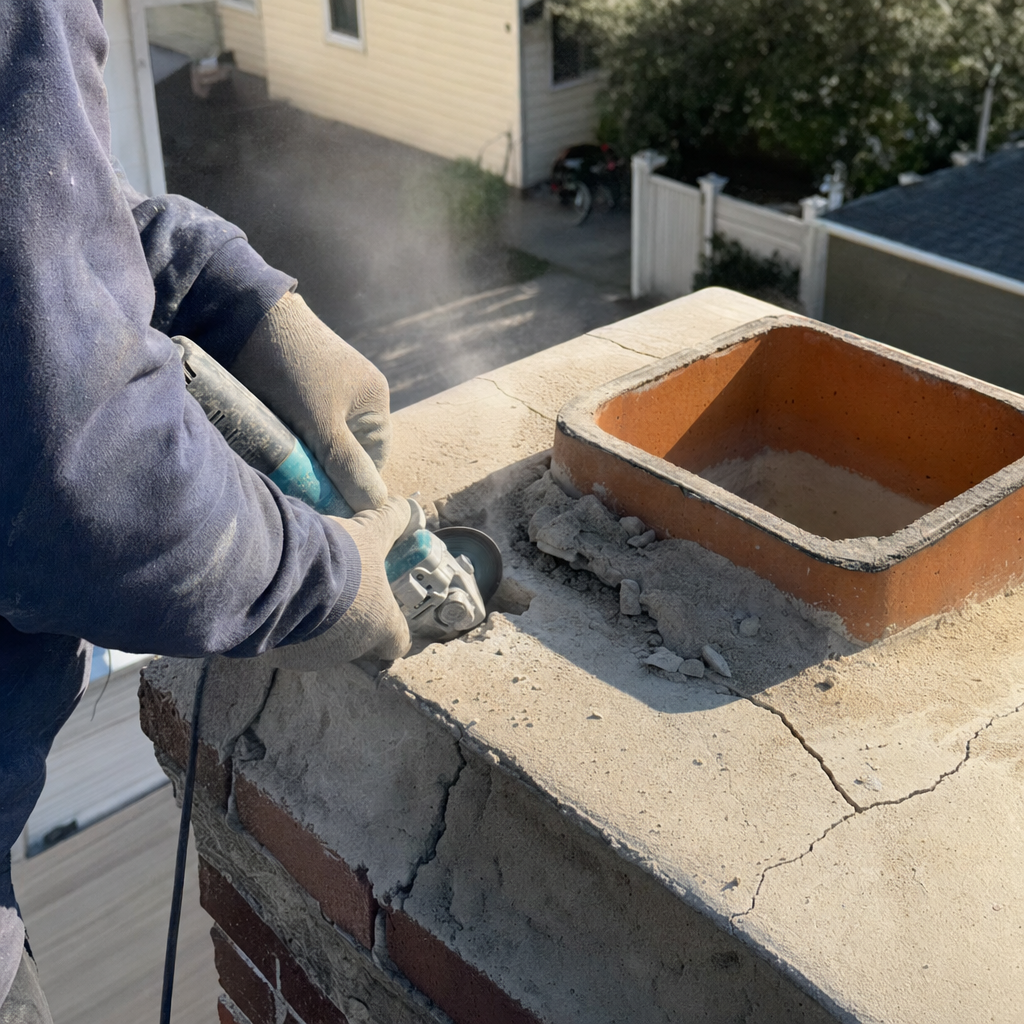
Mortar Repointing & Tuckpointing
Fort Lee’s wind exposure accelerates mortar deterioration. The Hudson River updrafts that make this city feel ten degrees colder in January also drive moisture deeper into masonry joints. We’ve repointed chimney stacks on low-rise buildings along Center Avenue where the pointing had turned to sand — not from age alone, but from sustained wind-driven rain against the Palisades cliff face. We grind out failed joints to proper depth, match the original mortar composition, and tool it for water shedding. Done right, repointing buys you decades.
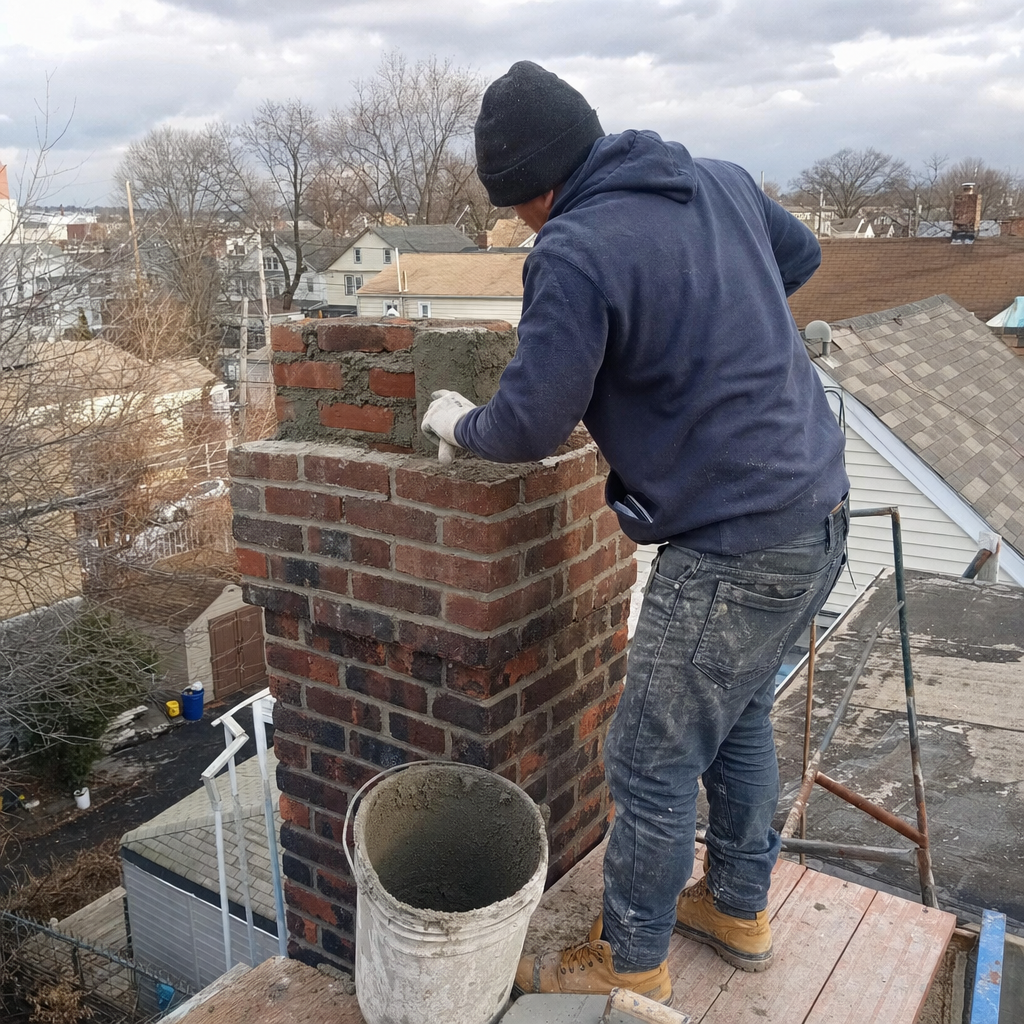
Chimney Waterproofing
Waterproofing in Fort Lee requires understanding the specific moisture vectors: wind-driven Hudson River spray, condensation from improperly lined gas flues, and capillary wicking in concrete chimney chases common to the high-rise stock. We apply professional-grade breathable sealers — not the hardware-store stuff that traps moisture inside — and we always pair waterproofing with proper cap and crown work. A sealed chimney with a failed crown will still leak. We fix both.
Flashing Repair
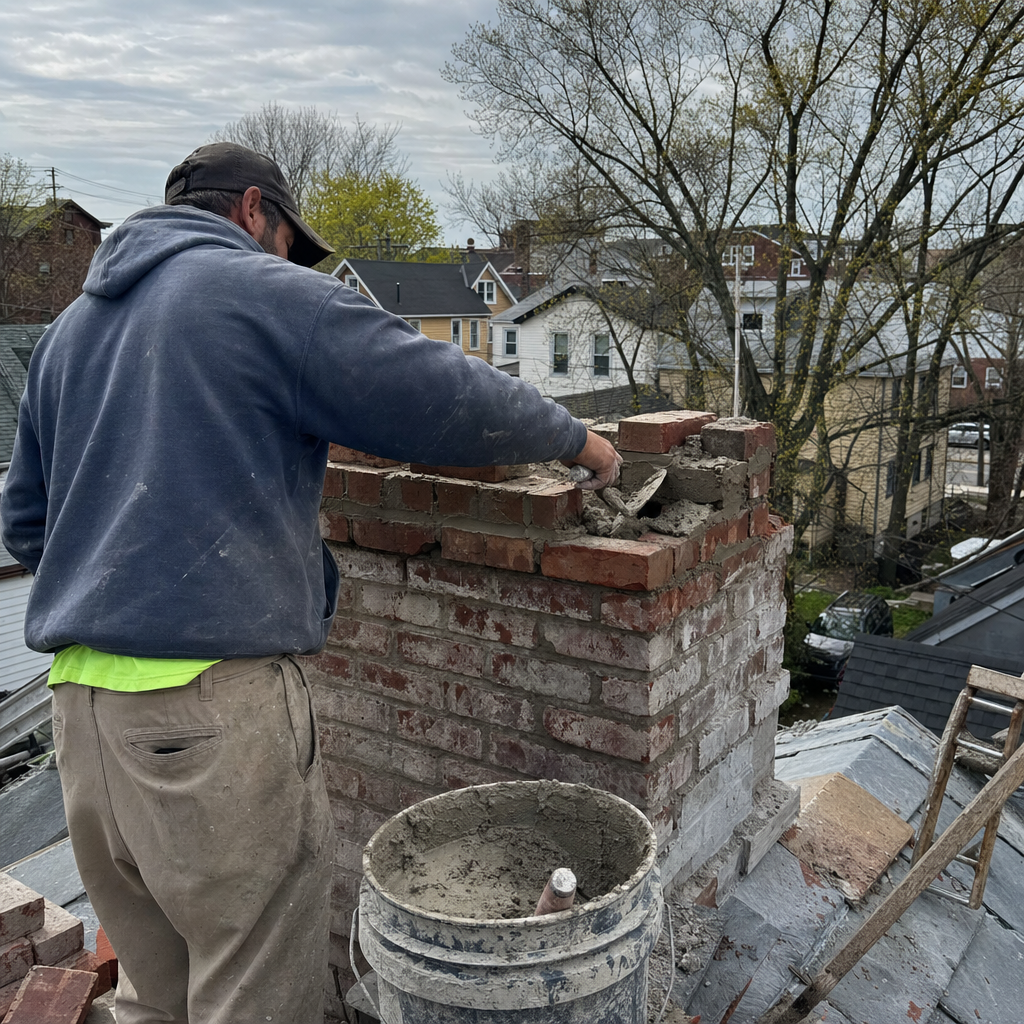
The transition between chimney and roof is where most leaks start. In Fort Lee’s older housing stock, we’ve found flashing that was never properly step-flashed into the masonry, or where sealant has hardened and cracked after twenty Hudson River winters. We fabricate custom flashing where needed and integrate it with the roofing system so water sheds properly. On flat roofs common to mid-rise buildings near Main Street, we pay special attention to pitch pockets and membrane termination — details that separate a lasting repair from a callback.
Spalling Brick Repair
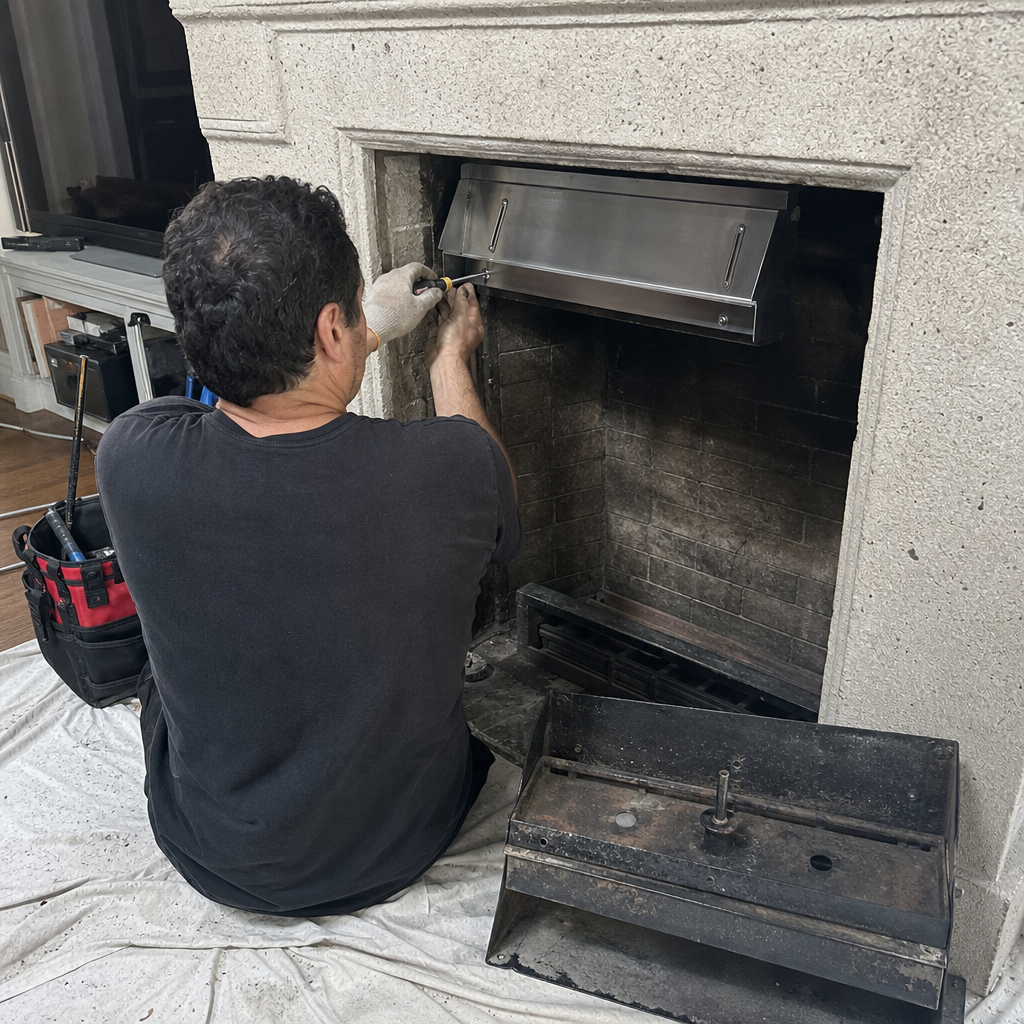
Spalling — brick faces popping off due to freeze-thaw cycling — is common in Fort Lee chimneys with failed pointing or saturated masonry. We’ve replaced spalled courses on century-old chimneys near the historic district and on 1960s brick veneer in the high-rise podium structures. The repair isn’t cosmetic. Exposed brick cores absorb more water, accelerating decay and risking structural compromise. We remove damaged units, match replacement brick for color and absorption, and rebuild with proper bond.
What happens when you call
- 1
A real person answersNo phone trees — you reach a local pro.
- 2
You get an upfront price rangeHonest numbers before anyone is dispatched.
- 3
A background-checked tech heads outLicensed & insured, dispatched right away.
- 4
You approve before work beginsNothing starts until you say go.
Trusted Brands We Service in Fort Lee
We specify professional-grade materials on every Fort Lee job — no big-box substitutions that fail in high-rise applications. For liner installations, we use DuraFlex 316Ti stainless steel and HeatShield cerfractory flue resurfacing systems, both rated for the acidic condensate conditions common to gas-converted boiler flues. For caps, crowns, and exterior components, we source through Copperfield and Famco, suppliers that stock the heavy-gauge stainless and proper sizing for commercial chimney terminations. We don’t order parts that “should work.” We measure twice, spec once, and keep Fort Lee buildings passing inspection.
Common Chimney Repair Problems We See in Fort Lee Homes
- The gas-conversion liner gap. Buildings that switched from #2 oil to gas in the 1980s–90s still run 12″×12″ clay-tile flues that are both too large and too porous for gas exhaust. NJ code now requires stainless steel liner inserts — and we find this violation in roughly half the Fort Lee high-rises we inspect.
- Palisades wind-driven backdrafting. Sustained Hudson River updrafts create negative pressure at rooftop terminations in tall buildings. Undersized caps or inadequate flue height cause combustion products to spill into mechanical rooms and occupied units — a CO risk that standard draft testing often misses.
- Blocked centralized boiler flues. High-rise chimney chases frequently lack modern caps or have damaged coping stones. Pigeons, debris, and ice accumulation block the flue, worsening draft problems and creating complete venting failure during heating season.
- Acidic condensate damage to building interiors. Unlined gas flues allow condensate to migrate through chimney walls into elevator shafts, lobbies, and residential units. We’ve seen drywall damage on the 15th floor caused by a flue leak at the roofline — the moisture travels.
Pricing for Chimney Repair in Fort Lee, NJ
| Service | Typical Range in Fort Lee |
|---|---|
| Mortar repointing (small chimney) | $450 – $950 |
| Spalling brick repair (partial rebuild) | $800 – $2,200 |
| Chimney waterproofing | $650 – $1,400 |
| Flashing repair | $400 – $1,100 |
| Stainless steel flue liner (single appliance) | $1,800 – $3,200 |
| High-rise boiler flue relining (multi-story) | $2,500 – $4,500+ |
| Partial chimney rebuild | $2,000 – $5,500 |
| Full chimney rebuild | $4,500 – $12,000 |
What moves the needle on cost? Access complexity is huge in Fort Lee — rooftop crane setups on 25-story buildings, parking restrictions on Hudson Terrace, confined mechanical rooms with limited laydown space. Material spec matters too: a basic liner versus an insulated, listed system for high-efficiency boilers. And urgency — failed CO inspections don’t wait for convenient scheduling. We provide upfront, itemized quotes before any work begins, and estimates are always free. Call (833) 349-5892 for exact pricing on your specific building.
We Also Serve Cities Near Fort Lee
We regularly cross the Hudson and work Bergen County chimneys in Leonia (where the housing stock shifts to lower-rise suburban), Palisades Park (similar high-rise density with its own conversion history), Edgewater (waterfront exposure even more severe than Fort Lee’s), and Ridgefield (older single-family stock with classic masonry issues). If you’re in 07024 or nearby, we know your chimney type — and we’ve probably repaired one just like it.
Serving Fort Lee, NJ — Our Local Coverage Area
We’re based in the Fort Lee area and know this community well. Use the map below to see our service coverage — if you’re nearby, we can almost certainly help.
FAQs — Chimney Repair in Fort Lee
Three factors converge in Fort Lee: the oil-to-gas conversion left oversized clay flues that are chemically incompatible with gas exhaust; the Palisades cliff-top location creates erratic wind pressure that defeats marginal draft systems; and the 1960s–1980s construction era predates modern liner requirements. Leonia’s lower-rise housing doesn’t face the same stack-effect pressures. Ridgefield’s older homes typically have properly sized flues for their heat source. Fort Lee’s unique vertical density and conversion history create a repair profile you won’t find inland. Call (833) 349-5892 if your building’s boiler flue is showing symptoms — estimates are free.
Yes — chimney relining for gas appliances in Fort Lee falls under the Fort Lee Building Department’s mechanical permit requirements, and the work must comply with NJ Mechanical Code and NFPA 211. We handle permit applications as part of our project scope, including the inspection scheduling. Most condo associations also require contractor insurance certificates and building management approval for rooftop access. We’ve navigated these requirements for numerous Fort Lee buildings and can walk your board or manager through the process. Call (833) 349-5892 to discuss your specific building’s approval workflow.
Most high-rise boiler flue relinings in Fort Lee take two to four days of active work, plus inspection scheduling. Day one: access setup, flue video inspection, and liner measurement. Day two: liner installation and connection. Day three: insulation top-off, termination fitting, and draft testing. Day four: municipal inspection if required. Access constraints — crane permits, rooftop load limits, parking for material staging on Hudson Terrace or Palisade Avenue — can extend logistics by a day or two. We coordinate with building management to minimize boiler downtime. Call (833) 349-5892 to schedule a scope visit and timeline estimate.
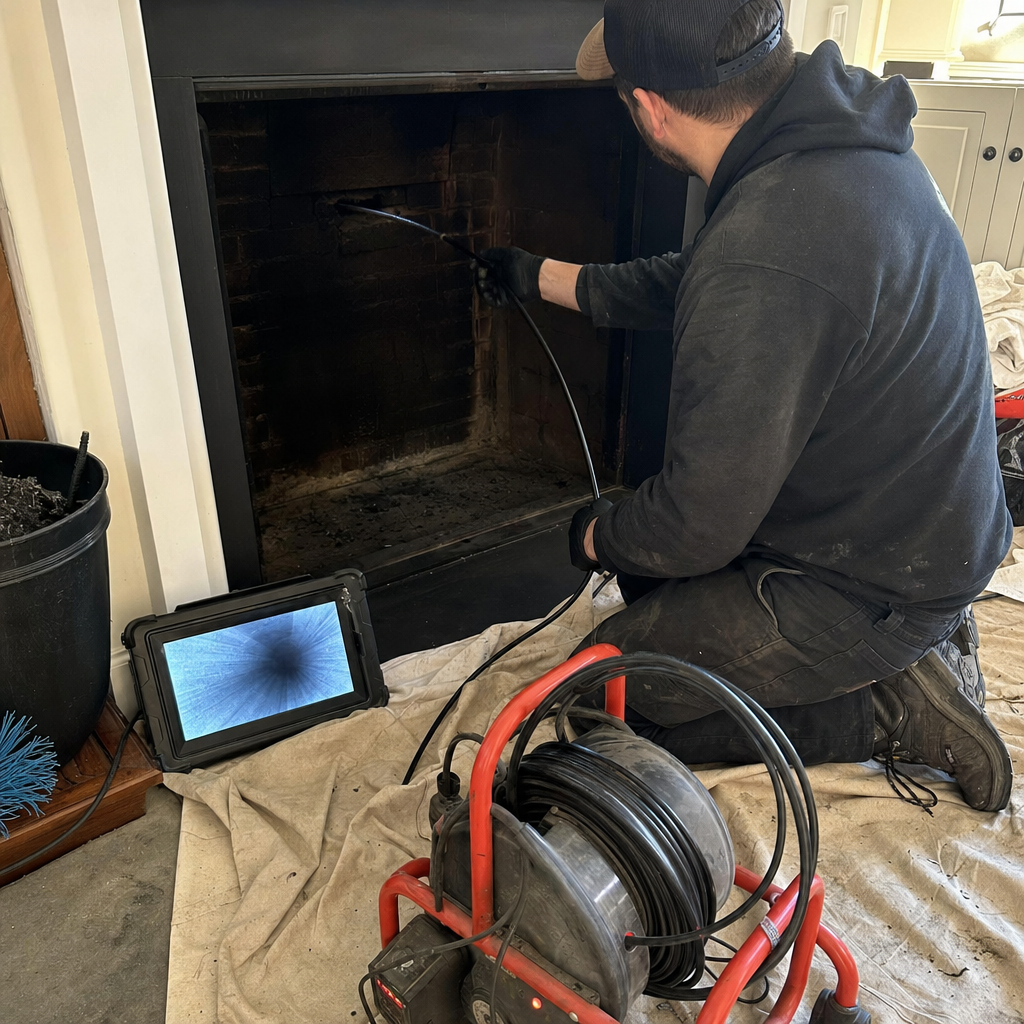
Watch for these specific indicators: persistent moisture or rust staining in the mechanical room or elevator shaft near the chimney chase; sulfur or combustion odors in lobbies or common areas; frequent pilot light failures or sooting on boiler components; and failed CO inspections or elevated ambient CO readings during annual testing. In Fort Lee’s converted buildings, these symptoms almost always trace back to the unlined or improperly lined flue. Don’t wait for a red-tag shutdown. Call (833) 349-5892 — we’ll video-inspect the flue and show you exactly what’s happening inside.
Yes — we regularly perform selective brick replacement and repointing on active chimneys, including boiler flues that can’t be taken offline for extended periods. The key is containment: we work in lifts, seal the flue temporarily during mortar curing, and schedule around heating-demand windows. In Fort Lee’s occupied high-rises, we’ve repointed chimney stacks section-by-section during shoulder seasons when boiler demand drops. Paul Torres plans the sequencing to maintain venting capacity throughout. For a specific assessment of your active chimney’s repair feasibility, call (833) 349-5892.
Ready to fix your Fort Lee chimney? Whether it’s a spalling brick stack on a Lemoine Avenue two-family or a full liner install in a Palisade Avenue tower, Paul Torres will come out, diagnose it honestly, and quote it upfront. No subcontractor roulette. No mystery pricing. Just 14 years of chimney expertise and 1,100+ reviews that say we do what we promise. Call (833) 349-5892 for your free estimate.
Written by Paul Torres, Owner at Legacy Chimney Cleaning New York, serving Fort Lee and the greater New York City area since 2010.