
Last updated July 10, 2026
Chimney Cleaning & Sweep Maintenance Checklist for New York City Homeowners
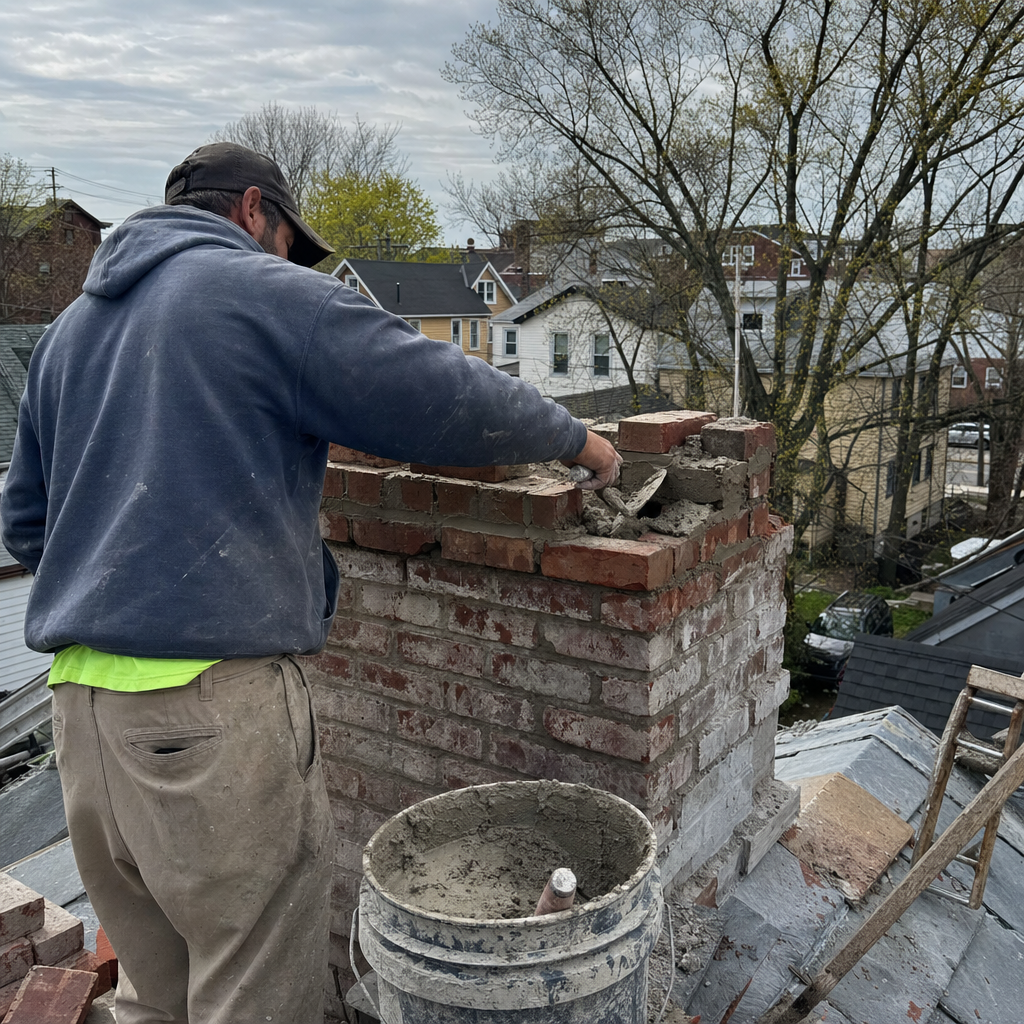
A homeowner in Gramercy Park called us after a $79 sweep told her everything looked fine. Three weeks later her upstairs neighbor complained of smoke in their apartment. The sweep had cleaned the wrong flue — a mistake our pre-job checklist catches every single time. In New York City’s dense, multi-unit buildings, chimney maintenance isn’t just about brushing soot; it’s about knowing which flue serves which appliance, how old masonry interacts with modern inserts, and why a skipped step in a six-story brownstone can send carbon monoxide into someone’s bedroom two floors down. This guide gives you the working checklist we use on every job — adapted for the building types, fuel sources, and code realities NYC homeowners actually live with.
Quick Answer
Chimney cleaning and sweep maintenance for New York City homeowners should include an annual Level 1 inspection, a documented pre-job flue verification, creosote removal based on actual fuel use (not calendar date), and a written post-sweep sign-off with photos. In NYC’s multi-unit buildings, maintenance intervals vary significantly: wood-burning fireplaces in pre-war brownstones typically need sweeping every 1–2 cords burned, while converted gas appliances in co-op buildings often require annual inspection but less frequent cleaning.
Table of Contents
- Room-by-Room Pre-Inspection Checklist for NYC Homes
- Building-Type Maintenance Intervals: Brownstones to High-Rises
- The Sweep-Day Protocol: What Happens During Professional Service
- Post-Sweep Sign-Off Checklist: Documentation You Should Receive
- Annual vs. Biannual: Matching Schedule to Fuel Use and Creosote Class
- Warning Signs Between Cleanings: When to Call Before Your Scheduled Service
- Common Mistakes to Avoid
- When to Call a Professional
- Frequently Asked Questions
Room-by-Room Pre-Inspection Checklist for NYC Homes
Before any sweep arrives, you can gather critical intelligence that speeds diagnosis and prevents the wrong-flue scenario we described above. In New York City’s vertically stacked housing stock, the fireplace you see may not connect to the chimney you think it does — especially in buildings with multiple conversions over decades.
Living Room / Primary Fireplace
Check these items and note anything unusual:
- Smoke stains on the firebox surround or mantel — indicate downdraft issues or flue obstruction. In Gramercy Park brownstones, we’ve traced these to deteriorated chimney crowns letting water pool and block airflow.
- White or gray powdery deposits (efflorescence) on exterior chimney brick — signals moisture intrusion through failed mortar joints, common in NYC freeze-thaw cycles.
- Draft test with a lit incense stick — smoke should rise steadily up the flue. If it spills into the room, you’ve got negative pressure or blockage. Note: in tightly sealed modern apartments, HVAC systems can create competing air pressure even with a clear flue.
- Cracked or spalling firebrick — heat transfer to surrounding structure risk. Document with photos for your sweep.
- Animal debris or nesting material — squirrel and raccoon intrusion peaks in fall as temperatures drop in New York City; chimney caps are your first defense.
Kitchen / Adjacent Rooms
Strange but true: chimney problems announce themselves rooms away.
- Sooty odor on humid days — indicates creosote buildup absorbing moisture; common in New York City’s muggy July-August periods when flue temperatures drop and draft weakens.
- Stains on ceiling below chimney chase — crown or flashing failure, not a roofing issue. We’ve replaced dozens of crowns in Upper East Side pre-wars where roofers misdiagnosed the source for years.
- Carbon monoxide detector readings near the chimney wall — any elevation warrants immediate professional inspection, not a wait-and-see approach.
Basement / Utility Area
In NYC’s older buildings, the basement often reveals the most about chimney condition:
- Water staining at cleanout door — flue liner breach or missing cleanout door seal
- Rust on furnace vent connector — improper draft or condensing flue gases, often from oversized flues in converted systems
- Debris falling from cleanout during heating season — liner deterioration or masonry collapse above
Paul Torres leads every job personally, and when a customer hands us a pre-inspection log with dates and photos, we can target our examination instead of spending billable time on basic discovery. That’s owner-on-site accountability working in your favor.
Building-Type Maintenance Intervals: Brownstones to High-Rises
Generic advice says “sweep annually.” In New York City’s diverse housing stock, that’s sometimes excessive and sometimes dangerously insufficient.
Pre-War Brownstones and Townhouses (Gramercy Park, West Village, Brooklyn Heights)
These buildings typically have original masonry chimneys serving wood-burning fireplaces, sometimes with later-added gas inserts. The maintenance profile:
- Working wood fireplace, regular use (1+ cords/season): Sweep after every 1–2 cords burned; annual Level 1 inspection minimum. Creosote Class 1 (glazed) can form in a single season of slow, smoldering fires — the “aesthetic fire” pattern common in Manhattan living rooms.
- Converted gas log set in original firebox: Annual inspection, sweep every 2–3 years unless debris or animal intrusion suspected. Gas burns cleaner but produces corrosive condensation in oversized flues designed for wood temperatures.
- Mixed fuel use (wood + gas backup): Annual sweep and inspection; fuel switching complicates creosote patterns.
Post-War Co-op and Condo Buildings (Upper East Side, Midtown, Downtown)
These often have central boiler systems with individual fireplace chimneys, or fully converted gas-only setups:
- Individual gas fireplace with direct vent: Annual inspection; sweep only if inspection reveals debris or deterioration. The sealed combustion chamber reduces but doesn’t eliminate maintenance needs.
- Shared chimney serving multiple units: Critical to verify which flues serve which appliances. We’ve found buildings where Unit 4A’s gas insert vents through a flue labeled “4B” on original 1950s drawings — documentation that matters when Paul Torres arrives with his checklist.
High-Rise and New Construction
Factory-built metal chimneys and direct-vent systems dominate:
- Manufacturer-specified intervals — typically annual inspection, with sweep contingent on findings
- HeatShield or DuraFlex liner systems — if retrofitted, follow liner manufacturer’s maintenance schedule, not the appliance manual alone
The freeze-thaw cycle in New York City — hard freezes in January-February, rapid warming, then summer humidity — accelerates masonry deterioration regardless of fuel type. A gas-only chimney with cracked crown and saturated brick can fail structurally even with minimal flue use.
The Sweep-Day Protocol: What Happens During Professional Service
When Paul Torres arrives at a New York City home, this is the sequence we follow — and what you should expect from any sweep worth hiring.
Step 1: Job Site Verification (5–10 minutes)
- Confirm address, unit number, and chimney identification in multi-unit buildings
- Review customer’s pre-inspection notes and any prior service records
- Photograph exterior chimney condition from street or roof access point
- Verify appliance type and fuel source against flue assignment — the critical step that $79 sweep skipped
Step 2: Interior Setup and Protection
In New York City’s compact rooms, this matters more than in suburban homes:
- Drop cloths on flooring, furniture protection for nearby upholstery
- HEPA-filtered vacuum connection before brush insertion — not after, when debris has already settled
- Access panel or damper inspection with flashlight and mirror, photo-documented
Step 3: Flue Cleaning and Assessment
Method varies by flue type and condition:
- Standard masonry flue, moderate buildup: Rotary or manual brushing with appropriate poly or wire bristles based on liner material
- Heavy glazed creosote (Class 3): Mechanical removal first, then chemical treatment if needed — never a single-pass job
- Lined flue (DuraFlex, Olympia Chimney, or similar): Inspection of liner joints, termination, and anchoring; brush selection matched to liner diameter and material
Step 4: Structural and Component Inspection
While the flue is accessible:
- Damper operation and frame condition
- Smoke chamber and shelf for creosote accumulation or deterioration
- Firebox brick, mortar, and hearth extension compliance with current code
- Chase cover or crown from interior access if possible; exterior visual if not
Step 5: Cleanup and Preliminary Discussion
Before packing tools, we walk the customer through findings — not a hard sell, but a factual report. In 14 years and 1,100+ reviews, we’ve learned that surprise findings delivered after the truck is loaded destroy trust. Paul Torres explains conditions while you can still ask questions and see the evidence.
Post-Sweep Sign-Off Checklist: Documentation You Should Receive
A legitimate New York City chimney sweep hands you documentation before leaving. Not a business card. Not a verbal “all set.” Written, dated, specific records that protect you and future occupants.
Required Documentation
| Document | What It Should Include |
|---|---|
| Written inspection report | Flue condition rating, creosote level (Class 1–3), structural findings, appliance compatibility assessment |
| Digital photo set | Before/after flue images, damper, firebox, crown or chase top, any damage or concern areas |
| Sweep completion certificate | Date, technician name, flue identification, fuel type — required by some NYC co-op boards and insurance carriers |
| Recommended service schedule | Next inspection date, conditions that would accelerate timing, specific items to monitor |
| Repair estimate (if needed) | Itemized scope, material specifications (Gelco cap, HeatShield resurfacing, etc.), timeline |
In our experience across New York City, buildings with proper documentation histories command higher resale values and pass co-op board inspections without drama. We’ve had Gramercy Park sellers call us specifically to generate missing certificates before closing — a stress no one needs.
We provide all documentation digitally within 24 hours of service, with physical copies available on request. From the sweep to the rebuild, the paper trail matters as much as the work itself.
Annual vs. Biannual: Matching Schedule to Fuel Use and Creosote Class
Calendar-based maintenance ignores the physics of what actually happens in your flue. Here’s how we schedule based on measurable conditions, not arbitrary dates.
Creosote Classification and Response
- Class 1 (Sooty, powdery): Normal byproduct of efficient wood combustion. Removable with standard brushing. Schedule: monitor annually, sweep when accumulation exceeds 1/8 inch.
- Class 2 (Granular, crunchy): Indicates slower combustion, restricted airflow, or marginal fuel moisture. Requires more aggressive removal. Schedule: inspect annually, sweep likely needed; investigate combustion efficiency.
- Class 3 (Glazed, tar-like): High combustion hazard, formed by slow, smoldering fires or consistently wet wood. Requires mechanical and often chemical removal. Schedule: immediate remediation, then biannual inspection minimum; behavioral or equipment changes essential.
Fuel-Specific Guidance for NYC Conditions
Hardwood (oak, maple, ash): Burned properly at high temperature with adequate air, produces minimal creosote. A typical Gramercy Park homeowner burning 1–2 cords of seasoned hardwood might need sweeping every 18–24 months with annual inspection.
Softwood or construction debris: Faster creosote accumulation, more spark hazard. Unfortunately common in New York City where fuel sourcing is irregular. Sweep annually minimum; we’ve seen Class 3 buildup in a single season from pallet wood and painted trim.
Gas (natural or propane): Minimal particulate, but corrosive condensation in cold flues. Annual inspection focuses on liner integrity, draft adequacy, and moisture damage — not creosote removal. In converted NYC buildings with oversized flues, we often recommend Gelco or Famco termination upgrades to improve draft temperature.
Pellet stoves: Clean ash handling and venting systems per manufacturer; flue inspection annually. The compressed fuel burns efficiently but ash handling systems clog without attention.
The “Shoulder Season” Factor
New York City’s heating season runs roughly November through March, but October and April “shoulder” months see many fireplaces lit for ambiance without sustained high temperatures. These low-temperature burns produce the most creosote. We recommend a mid-season inspection for heavy shoulder-season users — typically January — to catch Class 2 progression before it becomes Class 3.
Warning Signs Between Cleanings: When to Call Before Your Scheduled Service
Some conditions don’t respect your calendar. These warrant immediate professional assessment — and a few are true emergencies.
Call Within 24–48 Hours
- Visible creosote flakes in firebox or hearth — flue shedding indicates significant buildup above
- Damper stuck open or closed — energy loss or fire hazard, depending on position
- New water staining on chimney breast or adjacent wall — crown, flashing, or liner breach progressing
- Bird or animal sounds in flue — nesting material creates blockage and fire risk; raccoon eviction requires specific timing per NYC wildlife regulations
Call Same Day — Potential Emergency
- Smoke spillage into room during normal fire — downdraft, blockage, or structural failure; extinguish fire and do not re-light until inspected
- Carbon monoxide detector activation — evacuate, ventilate, call 911 if symptomatic; then chimney inspection before any appliance use resumes
- Visible flame or glowing material in chimney structure — chimney fire in progress; call 911, then us for post-incident assessment
- Bricks or mortar falling from chimney exterior — structural failure risk, especially in high wind or before predicted storm
We’ve responded to after-hours calls in every NYC borough. Paul Torres personally assesses whether the situation requires immediate action or can safely wait for scheduled service — no upsell, just straight evaluation based on 14 years of seeing what happens when warnings are ignored.
Common Mistakes to Avoid
- Hiring based on lowest advertised price — The $79 sweep in our opening story missed a wrong-flue assignment that endangered two households. In New York City’s regulated environment, legitimate sweeps carry proper insurance, equipment, and training costs that bottom-dollar pricing cannot cover.
- Assuming gas means zero maintenance — Gas appliances produce corrosive condensation and require draft verification. We’ve replaced liners in Park Avenue co-ops where “it’s gas, it’s fine” cost owners $8,000 in water damage.
- Ignoring building-specific flue assignments — Original construction drawings, if they exist, often don’t reflect decades of modifications. Always verify which flue serves which appliance before any work begins.
- Using unseasoned or mystery wood — That “free firewood” from a construction site in Queens? Painted, pressure-treated, or green wood destroys flues and creates Class 3 creosote rapidly. Burn only seasoned hardwood from known sources.
- Skipping post-sweep documentation — Without dated certificates and photos, you have no proof of maintenance for insurance claims, co-op boards, or resale. We provide these as standard; any sweep who doesn’t is cutting corners you’ll pay for later.
- DIY crown or flashing repairs with hardware-store caulk — Temporary fixes trap moisture and accelerate deterioration. Proper crown repair uses formulated crown mix or professional-grade sealants like those in our Copperfield supply line, applied with substrate preparation.
- Waiting for “the burning season” to schedule — September and October booking queues in New York City extend 3–4 weeks. Schedule summer inspections to secure preferred dates and catch summer moisture damage before it’s hidden by heating use.
When to Call a Professional
Call a qualified chimney professional when your annual inspection is due, when any warning sign appears, or when you’re purchasing a home with an existing fireplace you haven’t personally maintained. In New York City’s complex, aging housing stock, the cost of professional assessment is trivial compared to the liability of an uninspected system.
Legacy Chimney Cleaning New York offers free estimates throughout New York City — call (833) 349-5892 to speak directly with Paul Torres about your building’s specific needs. From routine sweeps to full liner rebuilds with DuraFlex or HeatShield systems, we handle the complete chimney lifecycle without referral runaround. Legacy Chimney Cleaning New York home
Frequently Asked Questions
Professional chimney cleaning in New York City typically ranges from $250–$450 for a standard masonry flue sweep with Level 1 inspection, with costs increasing for heavy creosote removal, multi-flue buildings, or difficult roof access common in Manhattan’s tighter spaces. Prices below $150 should raise questions about insurance coverage, equipment quality, and whether the sweep will perform genuine flue verification. Call (833) 349-5892 for an exact quote — estimates are free.
Wood-burning fireplaces in regular use need sweeping every 1–2 cords burned, typically annually for active users; gas appliances need annual inspection with cleaning contingent on findings; and mixed-use or converted systems follow the more frequent schedule of the dirtier fuel. In New York City’s pre-war brownstones with original flues, we often recommend biannual inspection for wood burners due to the freeze-thaw stress on aging masonry. Chimney Cleaning & Sweep in Gramercy Park
Resurfacing with HeatShield or similar professional-grade systems typically costs 40–60% less than full liner replacement for structurally sound but cracked clay flue tiles, making repair preferable when the chimney structure itself is intact. Full replacement with DuraFlex stainless steel becomes necessary when tiles are collapsed, the flue is unlined, or the chimney has suffered structural movement — common in New York City’s older buildings with settling foundations. We evaluate each case individually; call (833) 349-5892 for assessment.
Minor repairs — cap replacement, damper adjustment, minor mortar work — can often be completed same-day if materials are in stock and access permits. Major repairs requiring scaffolding, custom fabrication, or co-op board notification in New York City’s regulated buildings typically schedule 1–2 weeks out. Emergency conditions like active leaks or structural hazards receive priority scheduling; Paul Torres personally triages these calls.
Request a written sweep completion certificate with flue identification, fuel type, date, and technician name — standard documentation we provide on every job. Some Manhattan co-op boards additionally require NFPA 211 compliance statements or specific inspection formats; inform us of board requirements when booking and we’ll ensure documentation meets their specifications. We’ve worked with dozens of NYC co-op and condo boards and understand their varying protocols. Chimney Repair in Gramercy Park
Summer chimney odor in New York City typically results from creosote deposits absorbing humidity during the city’s muggy July-August periods, then releasing acidic compounds as temperatures rise — a sign that your flue needs cleaning even if you haven’t used the fireplace in months. Negative air pressure from air conditioning can also draw odors down the flue into living spaces. The solution is professional sweeping to remove odor-absorbing deposits, plus draft and pressure assessment to identify contributing factors. Fireplace Services in Gramercy Park
The Bottom Line
Chimney maintenance in New York City demands more than a calendar reminder and a phone book listing. It requires understanding your building’s specific flue assignments, matching service intervals to actual fuel use and creosote class, demanding documented proof of work, and recognizing warning signs that don’t respect annual schedules. The checklist we’ve shared reflects 14 years of owner-led work across every building type in this city — from Gramercy Park brownstones to Upper East Side high-rises — and the patterns we’ve learned from 1,119 customer reviews worth of real-world feedback. Professional-grade materials, properly installed, with direct accountability from the person who owns the business: that’s the standard your chimney deserves.
Ready to schedule your inspection? Call (833) 349-5892 for a free estimate. Paul Torres personally leads every job, and we’ll walk your specific building’s checklist together — no subcontractor roulette, no surprise findings after the truck leaves.
Written by Paul Torres, Owner & Lead Technician at Legacy Chimney Cleaning New York, serving New York City since 2012.