
Quick Summary
Reliable chimney cleaning in Guttenberg is essential to eliminate dangerous creosote accumulation, draft inversions, and toxic gas seepage across shared party walls in historic multi-family properties. Legacy Chimney Cleaning New York delivers specialized solutions by combining HEPA-contained mechanical sweeping, high-definition internal video scoping, and masonry restoration tailored to Hudson County architecture. Readers will understand local maintenance standards and can contact Legacy Chimney Cleaning New York to schedule a comprehensive chimney cleaning and camera inspection with a free estimate.
How Do You Get Reliable Chimney Cleaning in Guttenberg NJ?
You get reliable chimney cleaning in Guttenberg by hiring licensed technicians who use internal camera scoping and understand the structural demands of Hudson County masonry. In Guttenberg, where century-old multi-family buildings and row houses sit packed tightly along the Hudson Palisades, chimney care goes beyond basic sweeping. Wind shear off the river, coastal moisture, and shared party-wall chimneys create specific drafting and structural hazards that require an experienced eye.[5]
According to National Fire Incident Reporting System data published in New Jersey fire safety reports and safety guidance from Legacy Chimney Cleaning New York, residential heating and chimney fires account for thousands of structural incidents and millions of dollars in property loss annually across the country, with failure to clean being a leading factor. A complete service appointment should clear dangerous creosote, confirm that your flue walls are intact, and verify that exhaust gases are not leaking into neighboring apartments.[1]
What to Expect from a Guttenberg Chimney Cleaning Service
Quick Answer: A standard appointment for chimney cleaning in Guttenberg, NJ includes mechanical creosote removal, HEPA-filtered soot containment, firebox cleaning, and a detailed internal video inspection. Technicians also check the chimney crown, flashing, and draft pressure. Most standard service visits take between 45 and 90 minutes, with pricing based on accessibility, flue height, creosote stage, and any needed masonry repairs.
A professional service call clears flammable soot and creosote, removes animal debris, and ensures your heating appliance or fireplace drafts straight out of the building. In dense urban neighborhoods, service must also confirm that flue partitions have not cracked, preventing carbon monoxide and combustion odors from migrating across shared walls.[2]
Core Service Steps and Turnaround Times
When booking a chimney sweep, Guttenberg homeowners and property managers should expect a clear, three-part process:
- Internal Video Scoping: Technicians send a specialized camera up or down the flue. This reveals hidden clay tile fractures, mortar decay, animal nests, or heavy creosote glaze that cannot be seen from the firebox or rooftop alone.
- Mechanical Sweeping with HEPA Containment: Using rotary rods and brushes matched to your flue size (clay, cast iron, or stainless steel), sweeps dislodge soot and creosote deposits. High-powered HEPA vacuums run continuously to prevent fine dust from entering your living room or basement.
- Draft and Pressure Testing: As recommended by Legacy Chimney Cleaning New York, technicians inspect the damper and run smoke or draft-gauge tests to confirm that the flue draws air upward efficiently, even when exterior cliffside winds push against the stack.
What Does Chimney Cleaning Cost in Guttenberg, NJ?
Need chimney cleaning in Guttenberg?
We’re available now — call for a fast, free estimate.
Chimney service costs in Guttenberg depend on several direct factors: the height of the building, roof pitch, level of creosote buildup, and whether your property uses a single flue or a multi-flue shared stack. Routine sweeping on a well-maintained system costs significantly less than remediating hardened, glazed creosote or repairing broken flue tiles.
Service Tiers and Diagnostic Scope
Below is a breakdown of what typical service tiers involve for urban residential properties:
| Service Level | Standard Sweep | Camera Inspection (Level 2) | Liner Rebuild / Relining |
|---|---|---|---|
| Primary Focus | Routine soot and Stage 1-2 creosote removal | Diagnostic check for cracks, gaps, and hidden damage | Structural restoration for leaking or unlined flues |
| Video Scoping | Visual check from firebox/roof | Full-length high-definition camera scan | Pre- and post-installation camera verification |
| Party-Wall Assessment | Basic external check | Detailed evaluation of internal divider walls | Complete physical isolation of exhaust channel |
| Average Time | 45 to 60 minutes | 60 to 90 minutes | 1 to 2 days depending on site access |
Factors Influencing Your Final Quote
Several local conditions affect the total cost of chimney maintenance in Guttenberg:
- Flue Access and Building Height: Three- and four-story row homes with narrow alleyways or steep roof access require specialized ladders, roof staging, and safety rigging.
- Creosote Stage: Soft, powdery soot (Stage 1) brushes out quickly. Hard, shiny, tar-like creosote (Stage 3) requires chemical treatments and mechanical chain whips to remove safely.
- Flue Configuration: Historical properties with old coal flues converted to modern gas or oil boilers often require custom-fitted multi-flue caps or dedicated liner retrofits to vent safely.
How Do Drafting Conditions and Building Design Affect Chimney Safety?
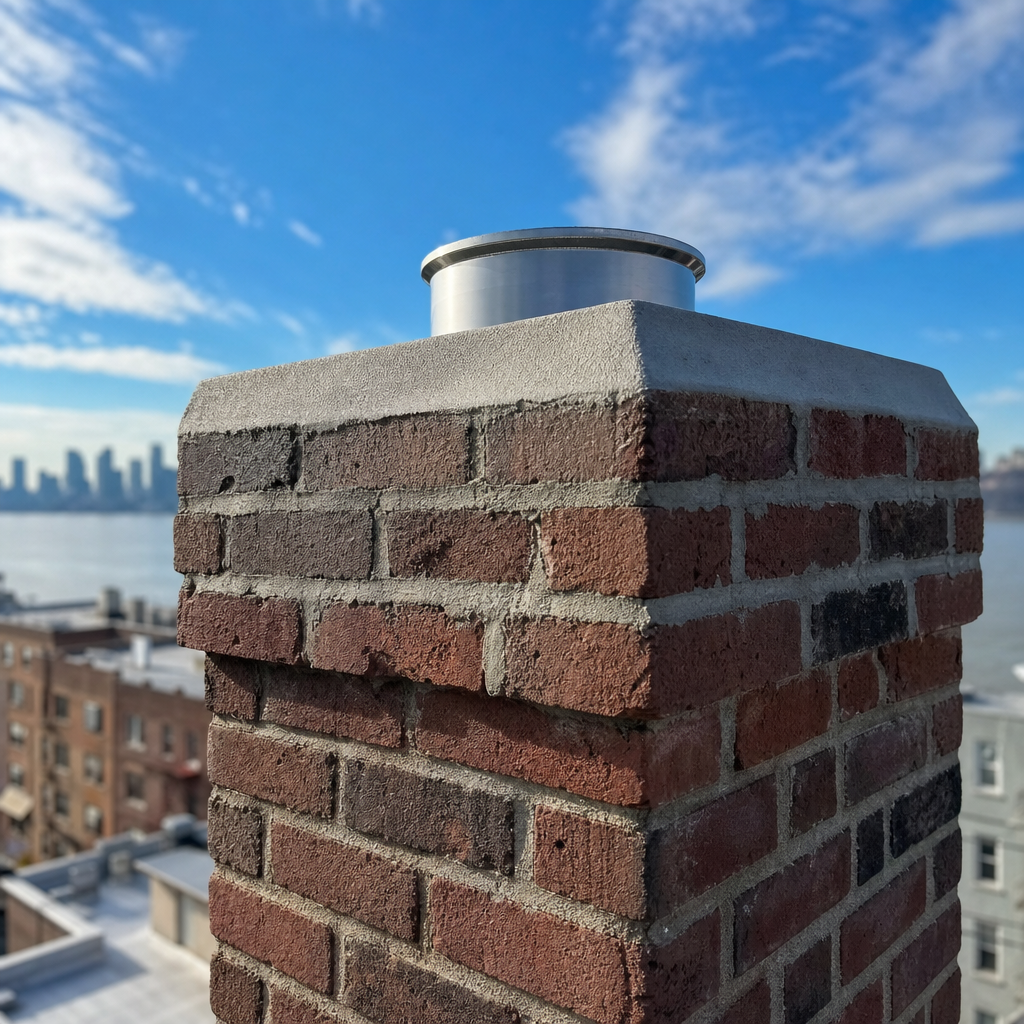
Guttenberg sits atop the Hudson Palisades, creating a unique local wind environment. High-velocity winds pushing up the cliff face create localized low- and high-pressure zones around rooftop parapets. These wind patterns can overcome normal chimney draft, causing draft inversions that force smoke and toxic exhaust backward into the building.
The Danger of Shared-Wall Flues
Many brick multi-family buildings and attached brownstones built in the late 19th and early 20th centuries were constructed with unlined or clay-lined brick chimneys sharing a single structural stack. The thin brick walls separating individual flues – known as withes – break down over decades of exposure to moisture and corrosive exhaust.
When a withe wall fails, the chimney stack effectively becomes an open chase. If a draft inversion occurs due to cliffside winds, boiler exhaust or fireplace fumes from one apartment can bleed directly through cracked party walls into neighboring units. Regional specialists such as Legacy Chimney Cleaning New York emphasize that regular camera inspections are the only reliable way to confirm that your flue walls remain completely isolated.[3]
When Do You Need Chimney Crown Repair or a Liner Rebuild?
Need chimney cleaning in Guttenberg?
We’re available now — call for a fast, free estimate.
You need chimney crown repair or a liner rebuild when exterior mortar begins to crumble, brick faces pop off, water appears in the firebox, or clay shards collect in the cleanout door. Because Guttenberg experiences humid coastal summers and freezing winters, water that enters masonry cracks expands during freeze-thaw cycles, rapidly accelerating structural damage.
Common Warning Signs of Water and Liner Damage
- Brick Spalling: Moisture trapped behind the brick freezes, causing the exterior face of the brick to crack, flake, or pop off entirely.
- Efflorescence: White, chalky mineral stains on exterior masonry, indicating that water is moving freely through the brickwork and evaporating on the surface.
- Clay Shards at Flue Base: Pieces of broken terra-cotta tile indicating that your original clay flue liner is cracking and falling apart.
- Damp Fireplace Walls or Odors: Musty, wet-soot smells after rainstorms indicate a cracked chimney crown or an improperly fitted chimney cap.
Clay Tile vs. Stainless Steel Flue Liners
When clay liners fail in older urban chimneys, installing a stainless steel liner is the industry standard for restoring safety without demolishing interior walls.
| Performance Factor | Original Clay Tile | UL-Listed Stainless Steel Liner |
|---|---|---|
| Thermal Shock Resistance | Vulnerable to cracking during rapid temperature spikes or chimney fires | Expands and contracts without cracking or splitting |
| Gas Isolation | Mortar joints deteriorate, letting gases leak into shared party walls | Continuous, joint-free tube provides a dedicated exhaust pathway |
| Installation in Older Buildings | Requires opening walls to replace individual cracked sections | Installed directly down the existing masonry cavity |
What to Look for in a Professional Chimney Sweep
Because New Jersey requires contractors performing structural repairs to maintain state licensing and liability insurance, property owners should verify credentials before hiring. Industry professionals like Legacy Chimney Cleaning New York suggest looking for technicians who focus on safety diagnostics rather than quick, surface-level cleanings.
- Direct Video Proof: A reputable technician will show you high-definition video footage of your flue interior before recommending liner repairs, masonry work, or creosote treatments.
- Experience with Urban Multi-Family Architecture: Your sweep should understand how to navigate party walls, coal-flue conversions, tight roof staging, and local building department codes.
- Dedicated Equipment: Reliable sweeps use heavy-duty HEPA containment vacuums, specialized rotary brushes, and custom drop cloths to keep your home completely clean.
Frequently Asked Questions About Guttenberg Chimney Services
How often should I have my chimney inspected and cleaned?
National fire safety standards and experts at Legacy Chimney Cleaning New York recommend that all chimneys, fireplaces, and heating appliance vents undergo an inspection at least once per year. Cleaning should be performed whenever soot and creosote reach 1/8 inch of accumulation, or immediately if you notice drafting problems or odors.[4]
How long does a typical chimney cleaning and inspection take?
A standard sweep and video inspection for a single flue takes roughly 45 to 90 minutes. Homes with multiple flues, difficult roof access, or heavy Stage 3 creosote buildup may require additional time.
How can I tell if my chimney has dangerous creosote buildup?
Look inside the flue with a bright flashlight. If you see a thick, black, tar-like glaze or flaky, crusty layers thicker than an eighth of an inch, your system has accumulated dangerous creosote and should not be used until cleaned.
Are chimney sweeps in Guttenberg required to be licensed and insured?
Yes. Contractors working on residential chimneys in New Jersey must be registered with the New Jersey Division of Consumer Affairs as Home Improvement Contractors and carry active general liability insurance. Always ask for proof of registration and insurance before allowing work to begin.
Need chimney cleaning in Guttenberg?
We’re available now — call for a fast, free estimate.
Sources
- 2011-2013 residential fire loss estimates – cpsc.gov (2013)
- Chimney and Wood Stove Safety – portland.gov (2018)
- Home Fires Involving Heating Equipment – bismarcknd.gov (2016)
- NJ Department of Community Affairs | December 27, 2016 – nj.gov (2016)
- Homeowner Resources | Ensure Safety Now – csia.org
Chimney Cleaning in Nearby Cities
We also serve the communities around Guttenberg:
- Chimney Cleaning in Jersey City
- Chimney Cleaning in Bayonne
- Chimney Cleaning in Hoboken
- Chimney Cleaning in North Bergen
- Chimney Cleaning in Secaucus
- Chimney Cleaning in Union City
- Chimney Cleaning in Weehawken
- Chimney Cleaning in West New York
Frequently Asked Questions
How can I tell if toxic exhaust is leaking through a shared party-wall chimney in a multi-family building?
The most reliable method is an internal video camera inspection, which detects cracked withe divider walls and decayed mortar joints between flues. Legacy Chimney Cleaning New York provides high-definition video scoping to verify structural flue isolation and ensure combustion gases do not seep into neighboring units.
What causes draft inversions along the Hudson Palisades, and how are they fixed?
High-velocity wind shear pushing up the Guttenberg cliff face creates turbulent pressure zones around rooftop stacks that force exhaust back down into living spaces. Legacy Chimney Cleaning New York conducts draft pressure diagnostics and installs custom multi-flue caps or stainless steel liner systems to maintain consistent upward draft.
Can standard sweeping brushes remove hardened Stage 3 creosote glaze?
No, standard brushes cannot dislodge glazed Stage 3 creosote, which forms a dense, flammable tar-like layer along flue walls. Legacy Chimney Cleaning New York utilizes specialized chemical treatments paired with mechanical rotary tools and HEPA containment to safely strip glaze without compromising fragile clay or masonry flues.
About the author
 |
Sarah Miller Sarah is a seasoned home services writer with over 8 years of experience covering residential maintenance and safety. With a background in structural engineering from the New Jersey Institute of Technology, she specializes in demystifying complex topics like chimney inspections, fire prevention, and emergency repairs for homeowners in the New York metropolitan area. Her practical, safety-focused advice has helped countless families maintain their heating systems efficiently and affordably. |
Chimney overdue for a cleaning or inspection?
We’re available now — call for a fast, free estimate.
Call Now - Free Estimate