
Last updated July 10, 2026
Seasonal Chimney Cleaning Care for New York City: Year-Round Homeowner’s Guide
The worst time to clean a chimney in New York City is October — but that’s when roughly 60% of homeowners call. By then, every reputable sweep has a three-week backlog, and the fireplaces that actually need urgent attention before winter don’t get it. After 14 years on New York City roofs and in flues across Manhattan, Brooklyn, and Queens, we’ve learned that chimney care here follows a different calendar than the rest of the country. This guide restructures the year around what actually happens inside a New York flue: the city’s specific weather patterns, building heat cycles, and the dangerous gap between when homeowners think about their chimney and when it actually needs attention.
Quick Answer
Seasonal chimney cleaning care in New York City means scheduling your annual sweep in late August or early September — before the October rush — and performing specific monthly checks for moisture intrusion, draft performance, and structural wear tied to the city’s freeze-thaw cycles and steam-heat building systems. A proper year-round plan prevents the three most common New York City chimney failures: crown cracking from winter moisture, summer humidity odor issues, and dangerous creosote buildup from delayed fall maintenance.
Table of Contents
- The Real NYC Chimney Calendar: When to Book and Why
- Spring Post-Season Inspection: What Nor’easters Leave Behind
- Summer Flue Care: Humidity, Odors, and Dormant Chimney Risks
- Fall Activation Protocol: Beyond the Basic Sweep
- Winter Draft Performance: How NYC Building Heat Systems Affect Your Fire
- Your Month-by-Month NYC Chimney Checklist
- Common Mistakes to Avoid
- When to Call a Professional
- Frequently Asked Questions
- The Bottom Line
The Real NYC Chimney Calendar: When to Book and Why
New York City’s chimney service demand doesn’t follow the temperature — it follows panic. The first cold snap in mid-October triggers a flood of calls that doesn’t slow until January. But the physics of your flue don’t care about your scheduling convenience.
Here’s what actually drives chimney wear in New York City:
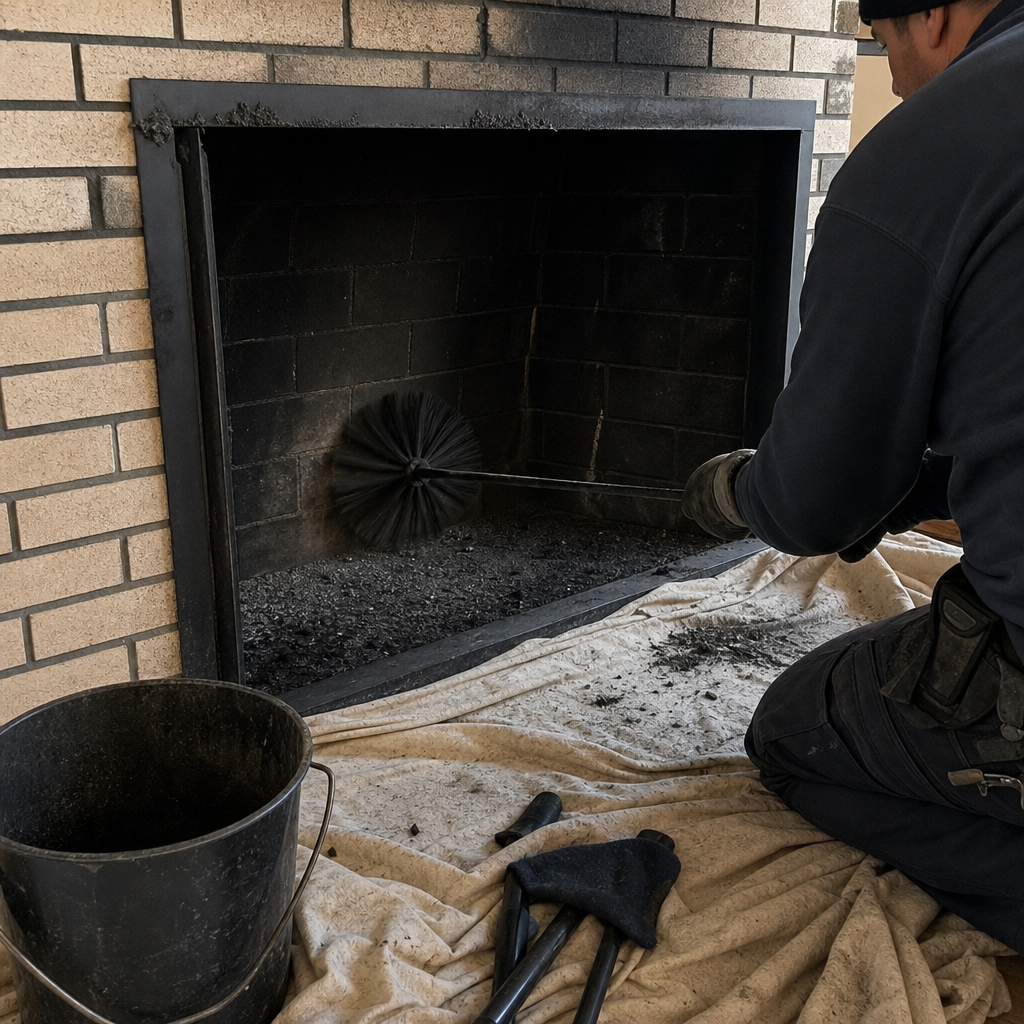
- Late August through mid-September: Optimal sweep window. Flues are dry from summer, contractors have availability, and you can address any damage before heating season. We complete roughly 40% of our annual Chimney Cleaning & Sweep in Gramercy Park and surrounding neighborhoods during this six-week window.
- October through November: The backlog period. Reputable sweeps book 2–3 weeks out. Emergency repairs cost more, and you’re choosing from whoever’s left — often uninsured crews or seasonal operators who vanish after December.
- December through February: Emergency-only territory. We handle urgent calls for dangerous creosote buildup, blocked flues, and structural failures, but routine maintenance gets deferred until spring — sometimes dangerously.
- March through May: Post-season assessment window. Critical for identifying winter damage before spring rains accelerate it.
The smart New York City homeowner books their annual sweep by Labor Day. Not because we’re pushing early sales — because we’ve seen what happens when a cracked crown goes undiscovered until the first freeze, or when a flue lined with glazed creosote gets its first hard use on Thanksgiving.
Paul Torres leads every job personally, and our schedule fills predictably. The homeowners who plan ahead get thorough work, not rushed emergency service.
Spring Post-Season Inspection: What Nor’easters Leave Behind
Spring is when New York City chimneys reveal their secrets. After a winter of heating cycles, freeze-thaw stress, and nor’easter moisture, the damage is done — and April is when it becomes visible.
Three spring inspection priorities specific to New York City:
- Crown and cap integrity after freeze-thaw cycles. NYC winters average 25–30 freeze-thaw cycles annually. Water seeps into micro-cracks, expands, and widens them. By March, a hairline crown crack can be a structural channel directing water straight to the flue liner. We inspect for spalling concrete, separated crown-to-brick joints, and cap displacement from wind gusts that hit rooftop levels with surprising force.
- Moisture intrusion from wind-driven rain. Nor’easters don’t fall straight down — they hit chimneys horizontally, exploiting any gap in flashing or crown overhang. In pre-war buildings common in Gramercy Park, the Upper West Side, and Park Slope, original flashing often lacks the step-flashing detail that modern codes require. We document water staining patterns that indicate whether the leak is cap, crown, or flashing-related — three different repairs with three different scopes.
- Animal nesting in dormant flues. From April through June, squirrels, raccoons, and chimney swifts treat unused flues as prime real estate. A nest can block draft, create fire hazards, and in the case of protected species like chimney swifts, legally complicate removal. Our spring inspections include flue camera verification to catch nesting before it becomes an emergency — or a wildlife violation.
Spring is also when we perform our Chimney Repair in Gramercy Park and across the city — addressing the damage winter inflicted while weather conditions still permit proper curing of crown sealants and masonry repairs.
Summer Flue Care: Humidity, Odors, and Dormant Chimney Risks
Closing the damper in May and forgetting your chimney exists until October is a common New York City mistake with real consequences. Summer humidity in the city regularly exceeds 70%, and a sealed flue becomes a condensation chamber.
Here’s what happens inside a dormant New York City chimney from June through August:
The odor complaint pattern. We field regular calls in June and July from homeowners reporting “sewer smells” or “musty odors” from their fireplace. In our experience, 80% of these aren’t plumbing issues — they’re humidity-driven. Warm, moist air enters the flue, condenses on cooler interior surfaces, and activates residual soot and creosote odors. The smell intensifies when central air creates negative pressure that draws chimney air into living spaces.
Structural humidity damage. Uncapped or poorly capped flues allow direct humidity entry. In brick chimneys, this moisture wicks into mortar joints. In metal flues, condensation accelerates corrosion at joints and cleanout doors. We’ve replaced Fireplace Services in Gramercy Park and citywide for homeowners who deferred summer cap installation, only to face liner replacement costs that dwarf the preventive fix.
What to do each summer month:
- June: Verify damper seal integrity. If you smell odors, the seal is failing or the flue needs professional evaluation.
- July: Inspect exterior cap and crown from ground level. Look for visible cracks, missing mortar, or cap displacement after spring storms.
- August: Schedule your fall sweep and inspection. This is your last window before the October rush.
Professional-grade caps from manufacturers like Gelco and Famco include proper mesh screening, rain overhangs, and draft-friendly designs that prevent the humidity trapping that cheap hardware-store caps create. We specify these brands because they solve the problems we actually see in New York City conditions — not because they look good in a catalog.
Fall Activation Protocol: Beyond the Basic Sweep
The first fire of the season isn’t a celebration — it’s a systems test. After 14 years and 1,100+ reviews, we’ve developed a specific activation protocol that goes far beyond what a basic sweep covers.
Paul Torres’s pre-season checklist — what we verify before any New York City fireplace sees its first flame:
- Flue clearance and obstruction check. Camera inspection from firebox to cap. We’re looking for creosote buildup (Level 1, 2, or 3), animal nesting, and structural liner damage. A basic sweep without camera verification misses what we consider critical safety data.
- Damper operation and seal test. Dampers warp, rust, and misalign. We verify full opening for draft and complete closure for when the system is idle.
- Firebox and hearth integrity. Cracked firebrick, deteriorated mortar, and compromised hearth extensions create fire risks that no flue sweep addresses.
- Smoke chamber and connector pipe evaluation. The smoke chamber — the area above the damper — is where most chimney fires originate. Parged surfaces should be smooth; rough or exposed brick creates turbulence that deposits combustible creosote.
- Draft performance test under actual conditions. This is where New York City specifics matter. We test draft with the building’s heating system running, because steam and forced-air systems create pressure differentials that affect chimney performance. A flue that drafts perfectly in a still building may fail when the boiler cycles on.
- Cap, crown, and flashing visual inspection. Pre-season is your last chance to address water entry before freeze-thaw cycles begin.
This protocol takes 60–90 minutes for a typical New York City fireplace. Rushed “sweeps” that clock in at 20 minutes skip steps that determine whether your chimney is actually safe or just superficially clean.
We document everything with photos and provide a written condition report. From the sweep to the rebuild, the same technician who evaluates your system can execute any needed repair — no referral runaround, no finger-pointing between contractors.
Winter Draft Performance: How NYC Building Heat Systems Affect Your Fire
Here’s something most chimney companies won’t explain: your fireplace doesn’t operate in isolation. In New York City’s dense housing stock, it’s competing with building-wide systems that alter air pressure, temperature gradients, and available combustion air.
Steam-heat buildings (pre-war, common in Manhattan):
Steam boilers cycle on and off, creating pressure pulses that can reverse chimney draft. In buildings with shared chimney structures — still common in Gramercy Park, the West Village, and Brooklyn Heights — your flue may draw differently depending on whether neighboring units are firing. We evaluate draft under actual operating conditions, not theoretical still-air scenarios.
Forced-air buildings (post-war, common in outer boroughs):
HVAC return air creates negative pressure that competes with chimney draft. In tight modern construction or extensively weatherized older buildings, makeup air may be insufficient for both heating and fireplace combustion. The result: smoke spillage, carbon monoxide risk, and fireplaces that “just don’t draw right” despite a clean flue.
What we do differently:
Paul Torres leads every job personally, and our draft evaluation includes building-system context. We don’t just measure flue temperature and call it good — we assess whether your chimney can perform safely given your actual building conditions. Sometimes the solution is a properly sized liner from Olympia Chimney or DuraFlex. Sometimes it’s addressing combustion air supply. Sometimes it’s identifying that a gas-converted fireplace still venting into an oversized flue will never draft correctly without modification.
This is the difference between a sweep who cleans and a technician who understands chimney physics in New York City’s specific built environment.
Your Month-by-Month NYC Chimney Checklist
Here’s the practical calendar we share with New York City homeowners who want to stay ahead of problems:
| Month | Action | Why It Matters in NYC |
|---|---|---|
| March | Post-season inspection; schedule repairs | Nor’easter damage is fresh and visible; repair window before spring rains |
| April | Address crown cracks, flashing leaks, cap issues | Freeze-thaw cycles ending; proper cure time for sealants |
| May | Final damper closure check; verify cap screening | Animal nesting season begins; humidity management starts |
| June | Odor check; verify damper seal | Humidity peaks; early detection of moisture intrusion |
| July | Exterior visual inspection from ground | Storm season; cap displacement common |
| August | Schedule annual sweep and inspection | Last optimal booking window before October rush |
| September | Complete sweep, camera inspection, activation protocol | Pre-winter readiness; address findings before first fire |
| October | First fire only after full protocol complete | Rushed October sweeps miss critical safety checks |
| November–February | Monthly ash removal; observe draft and odor changes | Heavy use period; early warning of developing problems |
This calendar assumes annual professional service. If you’re running a wood-burning fireplace more than twice weekly through winter, consider a mid-season inspection — creosote accumulation rates vary dramatically with wood quality, burn temperature, and flue configuration.
Common Mistakes to Avoid
- Booking your sweep in October. By then, quality providers are booked solid and you’re choosing from whoever’s available — often uninsured operators or seasonal crews who won’t be around if something goes wrong. The same sweep that costs $150 in September becomes a $300 emergency call in December.
- Assuming gas fireplaces need no chimney maintenance. Gas combustion produces water vapor and corrosive condensate. In New York City’s oversized masonry flues — common in converted buildings — this moisture destroys liners and mortar. Annual inspection is non-negotiable even for “clean-burning” gas.
- Ignoring summer odors as “just humidity.” Persistent chimney odor in June usually indicates creosote accumulation, animal intrusion, or water entry — all problems that worsen with delay. That musty smell is your chimney’s check-engine light.
- Using the fireplace when the building boiler cycles. In steam-heat buildings, the shared chimney pressure can reverse when the boiler fires. If your fireplace smokes intermittently, note whether it correlates with boiler cycles — this is diagnostic data, not a mystery.
- Accepting a sweep without camera inspection. A brush and vacuum can’t reveal liner cracks, hidden creosote glazing, or structural damage. In New York City’s aging housing stock, the flue interior tells stories that exterior appearance conceals.
- Deferring crown repair until “next year.” Crown cracks accelerate exponentially. A $400 sealant repair in April becomes a $2,500 crown rebuild by the following spring. Water is patient and destructive in freeze-thaw climates.
- Hiring based on lowest price without verifying insurance and reviews. Chimney work involves heights, combustion systems, and structural liability. Paul Torres is fully insured, and our 1,119 reviews at 4.7 stars reflect accountability you can’t verify with a low bid from an unreviewed operator.
When to Call a Professional
Call immediately if you notice smoke spilling into the room, a strong tar or chemical odor during fireplace use, visible cracks in the firebox or exterior masonry, or water staining on walls or ceilings near the chimney. These aren’t maintenance items — they’re safety hazards that worsen with use.
Schedule preventive service when your annual sweep is due, when you’re buying or selling a home (insurance and mortgage companies increasingly require chimney inspection documentation), or when you’ve changed fuel types or fireplace configuration. Any modification to the combustion system requires professional evaluation of venting compatibility.
Legacy Chimney Cleaning New York offers free estimates throughout New York City — call (833) 349-5892 to speak directly with Paul Torres about your chimney’s condition and schedule owner-led service at a time that actually works for your calendar, not in the October panic rush.
Frequently Asked Questions
Professional chimney sweeping in New York City typically ranges from $200–$350 for a standard Level 1 inspection and cleaning, with Level 2 camera inspections running $350–$550 depending on flue accessibility and system complexity. Prices below $150 often indicate rushed service without proper inspection equipment or insurance. Call (833) 349-5892 for an exact quote — estimates are free, and Paul Torres will assess your specific system before quoting.
The National Fire Protection Association recommends annual inspection for all chimney systems, with cleaning frequency determined by creosote accumulation — typically annually for wood-burning fireplaces used regularly, every 1–2 years for occasional use, and annually for gas systems to verify venting integrity. In New York City’s dense housing with shared structures and aging flues, we advise erring toward annual service regardless of fuel type. Call (833) 349-5892 to schedule.
Summer chimney odor in New York City is almost always humidity-activated: warm, moist air enters the flue, condenses on soot and creosote residues, and releases trapped combustion byproducts. A properly sealed damper and quality rain cap prevent this; persistent odor indicates inadequate sealing, excessive creosote buildup, or animal intrusion requiring professional evaluation. Call (833) 349-5892 if summer smells persist — they’re diagnostic, not just unpleasant.
No — gas fireplaces produce water vapor and corrosive condensate that damage flue liners and mortar, especially in New York City’s common oversized masonry flues where cooling occurs before exhaust exits. Annual inspection verifies liner integrity, proper draft, and absence of debris or nesting that blocks venting. Carbon monoxide risk from blocked or deteriorated gas flues is real and fatal — maintenance is non-negotiable.
A sweep removes combustible deposits from the flue; an inspection evaluates the entire system’s structural and functional condition. In our 14 years of New York City service, we’ve found dangerous liner damage, improper construction, and blocked flues in systems that were “swept” regularly but never properly inspected. Paul Torres performs both together — cleaning without evaluation is incomplete service.
Yes — absolutely. NYC’s combination of driving rain, freeze-thaw cycles, and active wildlife (squirrels, raccoons, chimney swifts) makes an uncapped flue a liability. Quality caps from manufacturers like Copperfield and Gelco include proper mesh, rain overhang, and draft-friendly design that prevents the problems cheap caps create. We specify and install caps that solve actual New York City conditions, not theoretical ones.
The Bottom Line
New York City chimney care isn’t about following a generic seasonal checklist — it’s about understanding how this specific climate, building stock, and heating infrastructure affects what happens inside your flue. The homeowners who avoid emergencies and expensive repairs are the ones who book in late summer, inspect in spring, and respect what summer humidity does to a dormant system. After 14 years, 1,100+ reviews, and thousands of New York City chimneys, we’ve seen the pattern clearly: prevention follows a calendar, but that calendar isn’t the one most homeowners imagine. Plan ahead, verify what you’re getting beyond a quick brush-and-vacuum, and work with someone who understands that your chimney operates as part of a building system — not an isolated appliance.
Ready to get ahead of the season? Call (833) 349-5892 for a free estimate from Legacy Chimney Cleaning New York. Paul Torres leads every job personally, and we’ll get your system properly evaluated before the October rush begins.
Written by Paul Torres, Owner & Lead Technician at Legacy Chimney Cleaning New York, serving New York City since 2012.