
Why New York Homeowners Choose HeatShield Chimney Cleaning
Legacy Chimney Cleaning New York provides independent HeatShield chimney cleaning, repair, and liner service across all five boroughs. We use genuine HeatShield OEM materials and warranty-safe techniques on every job, from routine creosote removal in Queens wood-burning systems to HeatShield service in Manhattan pre-war buildings. Call (833) 349-5892 for a free estimate.
HeatShield’s cerfractory and spray-on liner systems are common in New York chimneys because they bond directly to existing clay flues without a full tear-out—critical when you’re working with 100-year-old masonry that can’t take another season of freeze-thaw stress. We’ve installed and serviced HeatShield products in Park Slope brownstones, Upper East Side co-ops, and Astoria row houses. The material works, but only when it’s applied correctly and maintained by someone who knows what separation looks like before it becomes a carbon monoxide path.
We’re not affiliated with or authorized by HeatShield. We’re an independent HeatShield service provider with 14 years in the New York City market. That independence means we evaluate your flue honestly—if a HeatShield repair isn’t the right call, we’ll tell you. Paul Torres leads every job personally, and he’s the same person who answers for the work afterward.
Why Trust Legacy Chimney Cleaning New York for Your HeatShield Chimney Cleaning?
Paul Torres grew up in the Bronx watching his uncle do finish carpentry, learning early that honest hands-on work builds a real reputation. He trained in HVAC and building systems technology at Bronx Community College before getting pulled into chimney work through a neighbor who needed reliable hands. Fourteen years and 1,100+ reviews later, he’s the guy New Yorkers call when a previous sweep left them with more questions than answers. He still lives in the Bronx. Catches weekend games at Yankee Stadium when the season cooperates.
That background matters for HeatShield work specifically. HeatShield’s cerfractory technology—ceramic refractory hybrid—requires understanding both the material science and the substrate it’s bonding to. In New York, that substrate is often century-old terra cotta flue tile with decades of thermal cycling, sulfur attack from oil-to-gas conversions, and mortar loss at the joints. We’ve seen HeatShield applications fail because the prep work skipped the actual condition of that substrate. We don’t skip it.
Our 4.7-star rating across 1,119 reviews reflects hundreds of completed jobs across diverse chimney types. When Paul Torres leads your HeatShield service, you’re getting the owner on the roof, not a subcontractor learning the product line on your dime. “I’ll tell you what I see, not what sounds good.” That’s how we’ve built this.
We work with professional-grade materials: HeatShield OEM liner materials and sealants, DuraFlex for full liner replacements when HeatShield isn’t viable, Gelco caps, Olympia Chimney components, Famco hardware, and Copperfield supplies. Proper materials, properly installed. From the sweep to the rebuild.
Common HeatShield Chimney Cleaning Problems We Fix in New York
- HeatShield liner separation from the original flue due to thermal cycling. This is the big one in New York’s pre-war housing stock. The QF-100 and FDP-100 systems bond to existing clay flue tile, but decades of heating and cooling—especially in chimneys that vented oil before converting to gas—create micro-movement at the interface. We see this most often in Brooklyn and Queens row houses where the flue runs through an exterior wall. The separation starts at a joint, often hidden from a basic visual scan. Our Level 2 Inspection with video scope catches it. We remove creosote, re-prep the surface, and re-apply HeatShield Cerfractory patch to re-establish the bond.
- HeatShield material spalling from improper mixing during application. HeatShield Spray-On and Cerfractory products have specific water-to-powder ratios and working time windows. When mixed too wet or left in the bucket too long, the material loses adhesion and surface integrity. We’ve found this in DIY attempts and in cut-rate jobs where the “technician” treated it like standard mortar. The spalled areas create voids that collect creosote and weaken draft. We grind out the compromised material and re-apply to HeatShield spec—not guesswork.
- HeatShield joint failure at the termination cap connection. The top of the system takes the most abuse: rain, freeze-thaw, and the mechanical stress of the cap itself. In New York’s coastal climate with salt-laden air, the seal between HeatShield liner and termination hardware degrades faster than manufacturer literature suggests. We inspect this joint on every service call. When we find failure, we reseal with HeatShield OEM sealants and replace damaged Gelco or Famco caps with properly spec’d hardware.
- Cracking in HeatShield ceramic coating from chimney fires or excessive creosote buildup. A chimney fire—even a small one you might not have noticed—can micro-crack cerfractory coatings. The damage isn’t always visible from the firebox. We’ve pulled video from flues in Washington Heights and the South Bronx where the homeowner reported “a little smoke backup” and found hairline fractures throughout the HeatShield layer. Creosote removal is step one. Then we evaluate whether patch repair or full recoating is warranted. More than 30% compromised, and we recommend replacement over patching. That’s the honest call.
- Draft problems misattributed to the HeatShield liner when the real issue is crown damage or flue offset. Not every smoking fireplace is a liner problem. In New York’s older buildings, shifting foundations create flue offsets that no liner system can fully correct. We’ve seen cases where a previous company sold a full HeatShield reline when the actual fix was crown repair to stop water infiltration, or a smoke chamber parge to improve flow dynamics. Our diagnosis separates symptoms from causes. We fix the right thing.
HeatShield Parts & Our Repair-vs-Replace Approach
We stock genuine HeatShield OEM liner materials and sealants—never third-party substitutes that void your existing warranty or fail to bond correctly with the original application. For New York customers, that means faster turnaround. We don’t wait on shipping for standard repairs.
Our repair-vs-replace threshold is specific: when more than 30% of a HeatShield liner is compromised by separation, cracking, or spalling, we recommend full replacement rather than patching. Patches in heavily damaged systems create multiple bond lines, each a future failure point. We’ve done the callback on patched jobs that should have been rebuilt. We don’t do that to our customers.
When replacement is the right call, we evaluate whether HeatShield remains the best solution or whether a DuraFlex stainless liner better serves your flue configuration and fuel type. The recommendation depends on your chimney, not our inventory. Call (833) 349-5892 and we’ll walk through what we found.
Our HeatShield Service Process — Step by Step
- 1
Diagnosis with Level 2 Inspection. We start with NFPA 211-compliant video inspection of your flue interior, firebox, smoke chamber, and exterior crown. For HeatShield systems, we’re looking specifically for liner separation points, coating integrity, joint condition at the termination, and creosote accumulation patterns that indicate draft problems. We show you the video. Paul Torres explains what he’s seeing in plain language before any work is proposed.
- 2
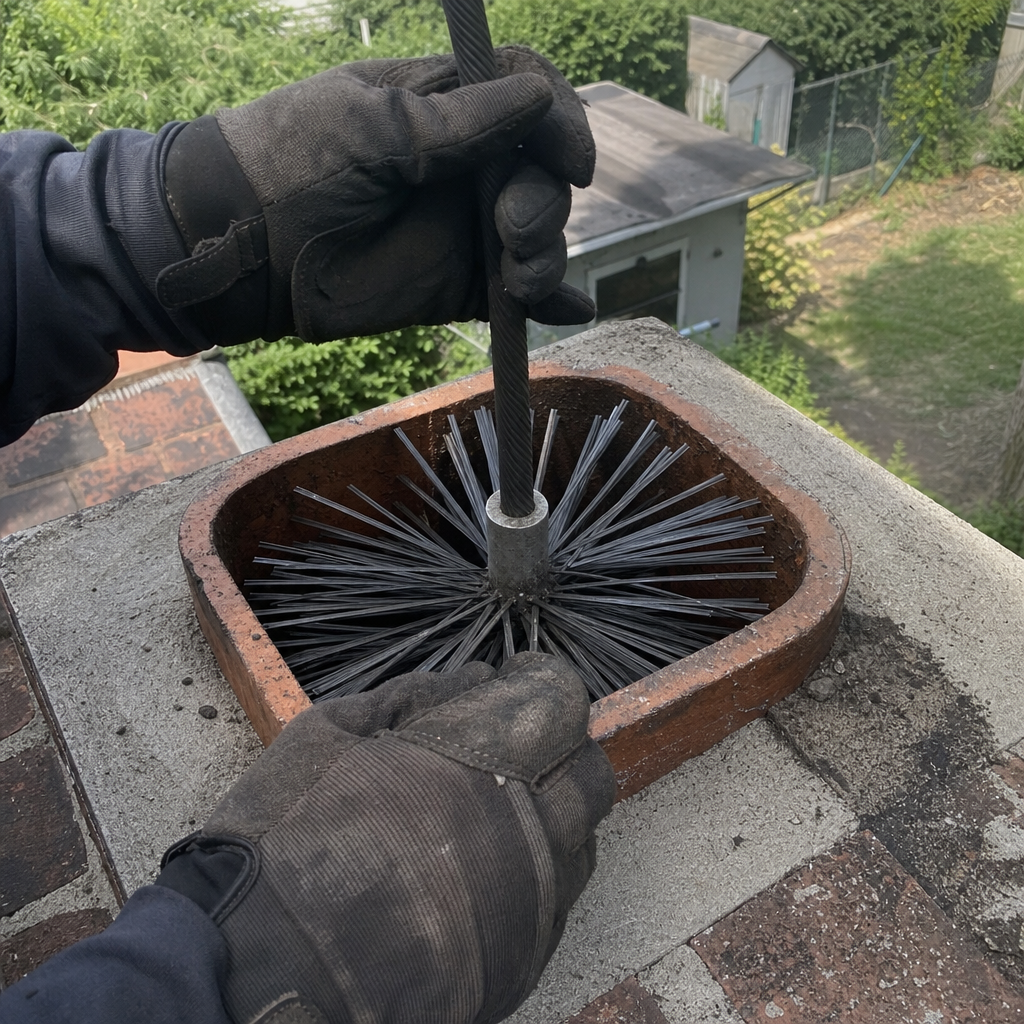
Creosote removal and surface prep. HeatShield repairs and reapplications require clean, sound substrate. We mechanically remove glazed creosote and light soot deposits using professional-grade equipment—no wire brushes that damage existing liner material. For recoating jobs, we profile the surface to HeatShield’s specified preparation standard.
- 3
Repair or reline with HeatShield OEM materials. Patch work uses HeatShield Cerfractory mixed to spec and applied with proper cure time. Full relines use QF-100 or FDP-100 systems sized to your flue and fuel type. Crown repair happens concurrent if water infiltration threatens the new work.
- 4
Testing and verification. We pressure-test or smoke-test per application type, verify draft with a manometer, and run final video to document the completed liner condition. You see the before and after.
- 5
Warranty documentation. We provide written documentation of materials used, application type, and our workmanship warranty. For HeatShield products still under manufacturer warranty, our use of OEM materials and proper installation technique preserves that coverage.
HeatShield Products We Service & Install in New York
We work across the full HeatShield residential line: QF-100 and FDP-100 joint repair and relining systems, HeatShield Spray-On cerfractory coating for resurfacing sound but pitted clay flues, and HeatShield Cerfractory patch for localized repairs and re-bonding applications. We stock QF-100 and FDP-100 components, Cerfractory mix, and OEM sealants for same-day and next-day service across Manhattan, Brooklyn, Queens, the Bronx, and Staten Island, including HeatShield repair in New York City.
Most New York installations we encounter are QF-100 systems in wood-burning fireplaces or FDP-100 in gas conversions where the existing flue is structurally sound but needs a sealed, smooth interior surface. We evaluate fuel type, flue dimensions, and existing condition before recommending which HeatShield product—or whether a different approach entirely—serves you best.
We Also Service These Brands
HeatShield isn’t the only professional-grade system we work with. We install and service DuraFlex stainless steel liners for flues where HeatShield isn’t structurally viable, and we source Gelco caps, Olympia Chimney components, Famco hardware, and Copperfield supplies for full-system work. Our multi-brand capability means the recommendation matches your chimney, not our limited inventory. From the sweep to the rebuild.
FAQs — HeatShield Chimney Cleaning Service in New York
Is Legacy Chimney Cleaning New York authorized by HeatShield?
No. We are an independent HeatShield service provider, not affiliated with or authorized by the manufacturer. We use genuine HeatShield OEM materials and follow installation specifications that preserve any existing manufacturer warranty, but we do not represent HeatShield corporate. Our 14 years of documented field experience with their products is our qualification.
Do you use genuine HeatShield/OEM parts?
Yes. We use only genuine HeatShield liner materials, Cerfractory mix, and OEM sealants for all repairs and installations. Third-party substitutes don’t bond correctly with existing HeatShield applications and can void manufacturer warranty coverage. We stock these materials locally for New York customers.
How long does HeatShield service take?
Most HeatShield repairs and maintenance cleanings take two to four hours on site. A full QF-100 or FDP-100 reline in a standard residential flue typically requires a full day, including setup, prep, application, and cure time. We schedule with realistic windows—no “we’ll be there between 8 and 6” games. Call (833) 349-5892 to book a specific arrival time.
What HeatShield models/series do you cover?
We service and install HeatShield QF-100, FDP-100, Spray-On cerfractory coating, and Cerfractory patch systems. If you’re unsure which system is in your chimney, our Level 2 Inspection includes identification and condition assessment.
Will service void my HeatShield warranty?
Proper service by a qualified technician using OEM materials does not void HeatShield warranty. Warranty issues arise when non-OEM materials are used or when installation specifications aren’t followed. We document our work to manufacturer standards. That said, we are an independent provider—any existing manufacturer warranty claim would still go through HeatShield directly, not through us.
How much does HeatShield chimney cleaning cost in New York?
HeatShield chimney cleaning and inspection in New York typically runs $280–$450 for a standard Level 2 Inspection with creosote removal on a HeatShield-lined flue. Localized Cerfractory repairs range from $450–$850 depending on access and extent. Full QF-100 or FDP-100 relines generally start around $2,800 and scale with flue height, diameter, and prep requirements. HeatShield service in Financial District high-rises and complex scaffolding situations add to labor. We provide exact quotes after inspection—estimates are free. Call (833) 349-5892 to schedule.
Does your HeatShield repair come with a warranty if I’m in a condo building?
Yes. Our workmanship warranty covers the repair itself regardless of building type—condo, co-op, townhouse, or single-family. For condo and co-op jobs in New York, we coordinate with building management for roof access and comply with your building’s insurance and access requirements. We document everything for board review. The warranty terms are the same; only the logistics differ.
Can you install a HeatShield liner in a flue that has an offset?
HeatShield QF-100 and FDP-100 systems accommodate moderate offsets common in older New York construction, but severe offsets—more than 30 degrees or with sharp corners—may require a flexible stainless liner instead. We measure and video the offset during inspection before recommending any system. Installing HeatShield in a flue it can’t properly line is a callback waiting to happen. We don’t do that.
How long does a HeatShield ceramic coating last before needing recoating?
A properly applied HeatShield Spray-On or Cerfractory coating typically lasts 15–20 years with normal use and annual inspection. In New York, heavy creosote buildup from frequent wood burning, or water infiltration from a compromised crown, can shorten that span. We assess coating thickness and integrity during every Level 2 Inspection and flag recoating needs before failure.
Will a HeatShield liner fix my chimney’s smoke drafting problem?
Sometimes, but not always. A HeatShield liner creates a smooth, properly sized flue surface that improves draft in many cases. But drafting problems also stem from chimney height, surrounding building mass, smoke chamber design, or negative pressure from modern HVAC systems. We diagnose the actual cause before recommending any liner system. We’ve seen too many liners installed on chimneys that needed crown repair or smoke chamber modification instead.
Do you remove creosote before applying HeatShield Cerfractory?
Yes. Absolutely. Creosote removal is mandatory before any HeatShield repair or recoating. Cerfractory and Spray-On products bond to masonry or existing HeatShield substrate—not to creosote deposits. Application over creosote guarantees failure. We mechanically remove all glazed and powdery deposits, then verify surface readiness before any material goes in. This isn’t negotiable, and any technician who says otherwise is cutting corners on your safety.
Book Your HeatShield Service in New York, NY
HeatShield systems work when they’re installed right, maintained honestly, and repaired by someone who knows what separation looks like on video before it becomes a hazard. Paul Torres leads every job personally. Fourteen years, 1,100+ reviews, and we’ve seen this before—we know how to fix it. Call (833) 349-5892 for a free estimate on HeatShield chimney cleaning, repair, or liner service anywhere in New York City.
Written by Paul Torres, Owner at Legacy Chimney Cleaning New York, serving New York since 2010.