
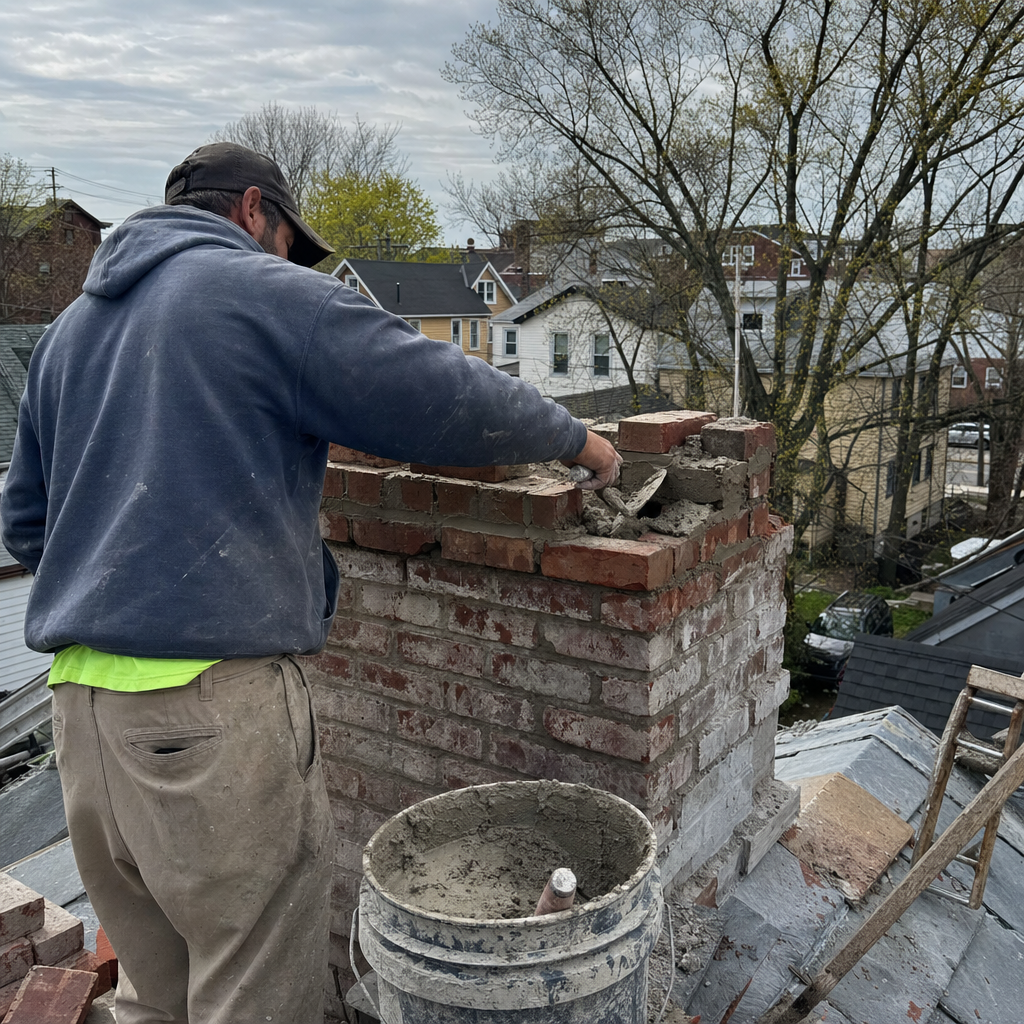
Chimney Liner Installation Cost in New York, NY: What You’ll Actually Pay
Chimney liner installation in New York typically runs $1,500–$7,000+, with most residential jobs falling between $2,200 and $4,800. The exact cost depends on your flue’s length, condition, and the appliance it’s serving — which is why Paul Torres, our Owner & Lead Technician, won’t quote over the phone without a camera inspection. Call (833) 349-5892 for a free, in-home estimate with real measurements.
New York’s housing stock makes this more complicated than the national averages you’ll find online. We’ve lined flues in pre-war co-ops on the Upper West Side that were 40 feet tall, bent at three angles, and last modified sometime in the 1940s. The liner quotes those jobs get from companies who measured over the phone are usually wrong by $800 or more. That’s not hypothetical — it’s what we hear when we’re called to fix someone else’s underbid job.
Why Liner Cost Ranges Are So Wide — And What Drives Your Number
Three variables control virtually every liner installation price in New York:
- Flue geometry: Straight runs in newer construction go faster. Offset flues in Brooklyn brownstones or Queens row houses require more material and labor.
- Existing liner condition: A partially collapsed clay liner takes longer to remove than one that’s simply cracked. Some masonry flues can be resurfaced instead of fully relined — that’s where Chimney Liner & Rebuild experience matters.
- Appliance type and BTU rating: Gas inserts, high-efficiency boilers, and wood-burning fireplaces each need different liner diameters and materials. NYC’s ongoing gas appliance conversions mean we’re regularly coordinating liner specs with appliance BTU ratings — a detail most cost articles skip entirely.
Paul Torres has walked into jobs in the Bronx where a homeowner was quoted $1,800 for a “standard liner” over the phone, only to discover the flue was oversized for a coal conversion from the 1930s and needed a custom reduction. The real cost was $3,400. “I’ll tell you what I see, not what sounds good” — that’s how we handle every inspection.
The Three Liner Types: Which One Your Chimney Actually Needs
Most articles list flexible stainless, rigid stainless, and cast-in-place resurfacing without explaining when each is genuinely indicated. Here’s how we decide on jobs across New York’s five boroughs:
Flexible Stainless Alloy Liners (316Ti vs. 304)
Flexible liners are what most New York homeowners end up with — and there’s a meaningful quality difference in the alloy. We use DuraFlex 316Ti for wood-burning and multi-fuel applications because the titanium-stabilized alloy resists corrosion from acidic creosote at the high temperatures our cold winters demand. The 304 grade costs less upfront but degrades faster with heavy wood use; we see it fail prematurely in homes near Pelham Bay Park where homeowners burn oak and maple all season.
Flexible liners shine in offset flues common to pre-war construction. They navigate bends that rigid pipe can’t follow. Installation runs $2,200–$4,500 for typical residential heights in New York, assuming standard removal of the existing clay liner.
Rigid Stainless Liners
Rigid pipe gives the best draft performance and is our choice for straight, vertical flues serving high-BTU gas appliances — think new boiler installations in Astoria or Long Island City conversions. The smoother interior surface improves flow efficiency, which matters when you’re sizing for a 150,000+ BTU unit.
The tradeoff: rigid can’t navigate offsets without engineered elbows, and every joint adds labor. Straight runs run $2,800–$5,200; add $400–$800 if we need to work around structural obstacles in the chase.
HeatShield Cast-in-Place Resurfacing
Not every flue needs a metal liner. When the existing clay tiles are structurally sound but cracked, spalled, or missing mortar joints, HeatShield cerfractory resurfacing lets us restore a smooth, sealed flue surface without full removal. Paul Torres has saved Upper Manhattan homeowners $1,500+ on jobs where a full liner was quoted unnecessarily — but he’s also declined to use HeatShield on flues too far gone to salvage.
Resurfacing runs $1,500–$3,200 and carries a 20-year performance history when properly applied. It’s not a budget shortcut; it’s the right call for specific masonry conditions.
What Chimney Liner Installation Costs in New York: Line-Item Pricing
| Service Component | Typical Range |
|---|---|
| Flexible stainless liner (316Ti), standard height | $2,200 – $4,500 |
| Rigid stainless liner, straight flue | $2,800 – $5,200 |
| HeatShield cast-in-place resurfacing | $1,500 – $3,200 |
| Existing clay liner removal & disposal | $400 – $900 |
| Flue offset or chimney chase access complications | $300 – $800 |
| Top plate & rain cap (Gelco or Olympia Chimney) | $180 – $350 |
| Appliance connection & BTU-rated termination | $250 – $600 |
| Camera inspection & written condition report | $150 – $250 (credited toward install) |
These are real 2024–2025 ranges from jobs Paul Torres has priced across the Bronx, Brooklyn, Queens, Manhattan, and Staten Island. The low end assumes a straight flue, accessible cleanout, and no surprises. The high end reflects what we find in converted brownstones where three fuel changes over 80 years left the flue undersized, oversized, or lined with incompatible material.
Why New York’s Housing Stock Makes Liner Quotes Unreliable Over the Phone
Here’s what most national cost guides miss: New York’s pre-war housing includes thousands of chimneys that were converted from coal to oil to gas over decades. Each conversion often left the flue in a condition that doesn’t match any standard spec sheet.
Last winter, Paul inspected a chimney in a 1926 Crown Heights row house. The flue had been “lined” in the 1970s with a corrugated aluminum vent — completely inappropriate for the new high-efficiency boiler the homeowner had just installed. The phone quote they’d received for a “standard liner” didn’t account for removing the aluminum, resizing for the boiler’s BTU rating, or the offset bend where the chimney had been rebuilt after a partial collapse in the 1990s. Our measured quote was $2,100 higher — and the competitor who gave the low phone number never called back after seeing the actual flue.
This layered history is why we require a camera inspection before quoting. The $150–$250 inspection fee is credited toward your installation if you move forward. You’re not paying for a sales pitch; you’re paying for Paul to show you exactly what your flue contains, in plain language, before a single tool hits the firebox.
The Warranty Reality: Where Cheap Liner Installs Actually Fail
A liner warranty is only as good as its installation and termination points. We’ve repaired work from other companies where the liner itself was fine — but the top connection leaked, the appliance collar was improperly sealed, or the rain cap was a big-box generic that corroded in two seasons.
On every job, Paul Torres specifies:
- Top termination: Custom top plate with Gelco or Olympia Chimney rain cap, properly flashed to the existing crown or chase cover
- Appliance connection: BTU-rated collar with proper clearances, not a hose clamp and hope
- Material documentation: DuraFlex or HeatShield batch records, so any future technician knows what’s in your flue
We use Famco termination fittings where the appliance spec demands them — not because they’re flashy, but because they’ve documented performance in high-moisture, freeze-thaw cycling like New York’s. The difference shows up year seven, not day one.
Gas Insert Conversions: A Cost Category Most Guides Ignore
NYC’s ongoing gas appliance market means many liner installations aren’t for damaged flues — they’re for new inserts or boiler upgrades that require a properly sized vent. This changes the cost calculation because we’re coordinating with the appliance’s BTU rating, draft requirements, and the manufacturer’s listed installation instructions.
A gas insert rated at 30,000 BTU needs a different liner diameter than a 60,000 BTU model. Install the wrong size and you get poor draft, sooting, or condensation damage — none of which are covered under the liner warranty because the error was sizing, not material. Paul Torres reviews the appliance spec sheet before quoting every gas conversion. It’s 15 minutes of homework that prevents a $3,000 redo.
FAQs
Most chimney liner installations in New York cost between $2,200 and $4,800, with simple resurfacing jobs starting around $1,500 and complex rigid installs exceeding $7,000 in pre-war buildings with offset flues. Call (833) 349-5892 for a free estimate — we’ll measure your flue in person and quote exactly what your job requires.
HeatShield resurfacing costs $1,500–$3,200 and works when your clay tiles are cracked but structurally intact; full liner replacement runs $2,200+ and is necessary when tiles are collapsed, missing, or your flue has been converted between fuel types. Paul Torres makes this call with a camera inspection — we’ve saved homeowners money by resurfacing, and we’ve prevented safety hazards by insisting on full replacement when resurfacing would be a band-aid.
Same-day installation is possible for straightforward flexible liner jobs near you when we have your liner diameter and material in stock, but most New York flues require us to order specific lengths or alloys after measuring. We typically schedule installation within 3–5 business days of inspection, or faster for emergency situations where the flue is actively unsafe. Call (833) 349-5892 and we’ll prioritize based on your chimney’s condition.
Phone quotes miss the flue geometry, existing liner condition, and appliance BTU rating — the three factors that control 90% of your cost. In New York’s pre-war housing, layered fuel conversions and offset flues make over-the-phone estimates wrong by $800 or more on a regular basis. We don’t quote what we haven’t measured; the $150–$250 camera inspection is credited toward your installation and gives you a price you can actually plan around.
Get a Measured Quote From Paul Torres
Fourteen years, 1,100+ reviews, and Paul Torres still leads every job personally. From the sweep to the rebuild, we handle the full scope — no referral runaround, no subcontractor roulette. If your chimney needs a liner, we’ll show you exactly why, exactly what material, and exactly what it costs before any work begins.
Call (833) 349-5892 today for a free estimate. Inspections include a camera review of your flue condition and a written report you can keep — whether you hire us or not.
Written by Paul Torres, Owner & Lead Technician at Legacy Chimney Cleaning New York, serving New York, NY.