
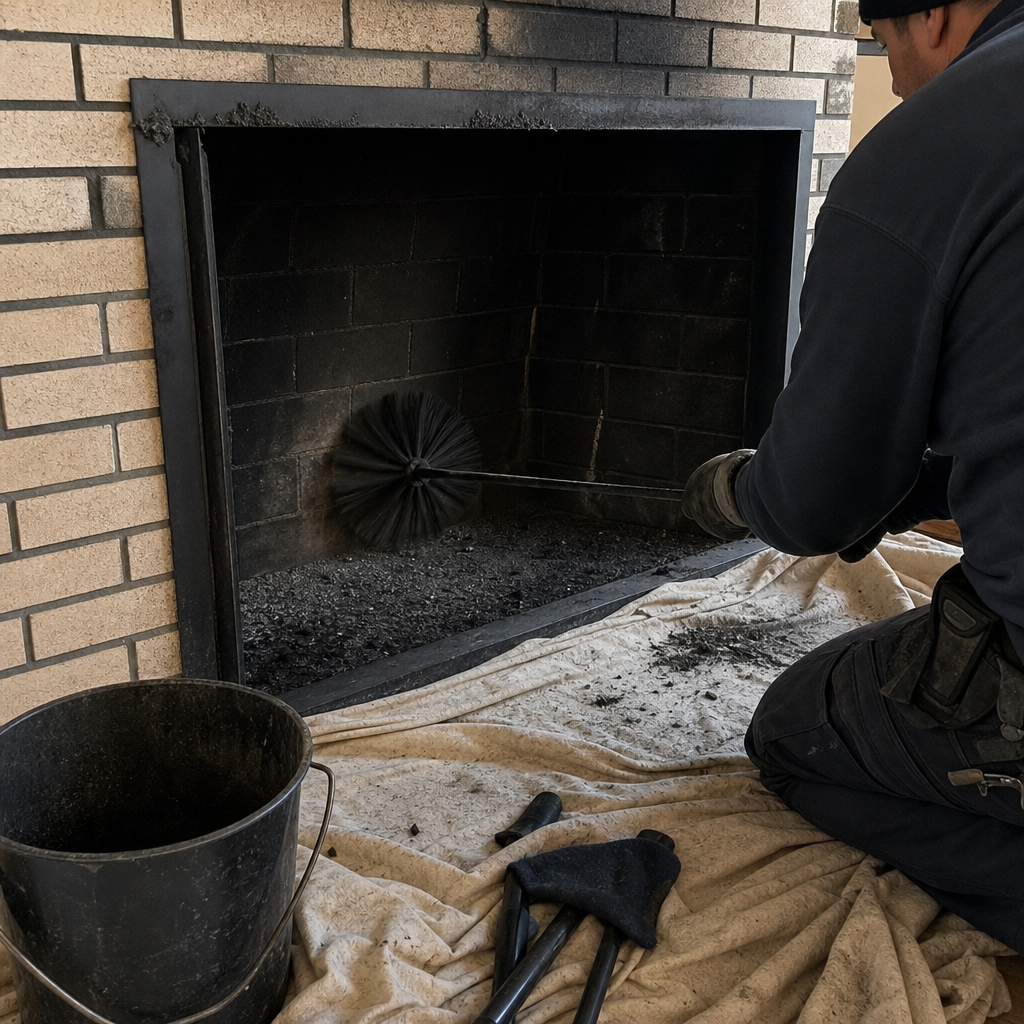
How Often Should You Clean Your Chimney in New York? It Depends on What’s Burning and How Hard
Most chimneys in New York should be inspected annually and cleaned whenever creosote buildup reaches 1/8 inch — which for active wood-burning fireplaces typically means once per burning season, while gas fireplaces and decorative log sets often stretch to every 2–3 years with annual inspection. The NFPA 211 “once a year” guideline is a useful floor, not a universal ceiling, and in our experience across the five boroughs, two chimneys on the same block can need completely different schedules. If you want a usage-calibrated assessment for your specific system, call Legacy Chimney Cleaning New York at (833) 349-5892 — Paul Torres evaluates every flue personally before recommending work.
Why Calendar-Only Scheduling Fails in New York’s Varied Housing Stock
Paul Torres cleaned two chimneys on the same Brooklyn block last February. One hadn’t been touched in three years and was nearly clean — a gas log set used four or five times a winter. The other had been swept “last season” and carried Stage 2 creosote buildup halfway up the flue — an older Buck Stove burning green cordwood six nights a week through the Polar Vortex. Same city, same ZIP code, completely different stories.
New York’s housing landscape compounds this variability. A prewar co-op in Washington Heights with an original terracotta flue and a decorative gas insert operates nothing like a freestanding wood stove in a Staten Island colonial venting through a stainless steel liner. The apartment dweller might accumulate negligible residue across two winters; the Staten Island homeowner with an uncertified stove burning at low damper settings can pack 1/4 inch of glazed creosote into a season. “I’ll tell you what I see, not what sounds good” — that’s how Paul approaches every inspection, because a liability-driven “sweep it every year no matter what” wastes your money when the flue is clean and endangers your household when it’s not.
The city’s climate sharpens these distinctions. New York’s freeze-thaw cycles — particularly the harsh swings of January and February — accelerate masonry deterioration in chimneys that vent moist combustion gases. A gas boiler flue in a Queens brownstone runs condensed water down the flue tile for months, carrying acidic residue that degrades mortar joints. That chemical wear isn’t creosote, but it’s why we inspect annually even when cleaning isn’t required. Meanwhile, a wood-burning fireplace in the Bronx used primarily during holiday gatherings might genuinely need sweeping only every 18–24 months — provided the homeowner checks the flue visually between professional visits.
The Usage-and-Fuel Matrix: How Often Your Specific Chimney Actually Needs Cleaning
After 14 years and over 1,100 jobs across New York’s five boroughs, we’ve developed a practical framework that replaces the calendar with measurable factors. Here’s how fuel type and usage pattern translate to defensible cleaning intervals:
- Wood-burning fireplace, occasional use (1–2 fires weekly, October–March): Inspect annually; clean every 12–18 months if burning seasoned hardwood, every 12 months if burning softwood or mixed loads. A typical Manhattan or Brooklyn homeowner with weekend fires falls here.
- Wood stove, primary or substantial heat source (5+ nights weekly, December–March): Inspect and clean annually at minimum; heavy users with older, non-EPA-certified stoves often need mid-season inspection. These are common in Staten Island and outer Queens where supplemental heating reduces oil bills.
- Gas fireplace, decorative log set (occasional ambiance use): Inspect annually for venting integrity and debris; clean every 2–3 years unless bird nests or other blockages appear. The vast majority of New York apartment and condo fireplaces fall in this category.
- Gas boiler or furnace flue: Inspect annually — New York’s Local Law 152 requires periodic gas piping inspection, and the flue is your first defense against carbon monoxide backdraft. Clean when soot or scale accumulation exceeds 1/8 inch, typically every 1–3 years depending on burner tuning.
- Pellet stove: Inspect annually; clean every 1–2 tons burned. Pellet stoves burn efficiently but produce fine ash that clogs venting systems differently than wood creosote.
The critical variable hidden in this matrix is appliance efficiency. Older wood stoves — pre-EPA certification, common in homes that haven’t updated their hearth in decades — burn cooler and incomplete, sending unburned hydrocarbons up the flue where they condense as creosote. An older stove might generate 3–4 times the creosote per cord as a modern home equipped with a Phase II-certified unit. We’ve had customers in the Bronx upgrade from a 1980s Fisher stove to a new Blaze King or Pacific Energy and legitimately extend their cleaning interval from annual to biennial — same usage, different accumulation rate. That’s a conversation worth having before we book your sweep.
The 1/8-Inch Rule: What Homeowners Can Check Without Professional Tools
NFPA 211 states that any measurable deposit of 1/8 inch or more requires cleaning regardless of calendar schedule. This is the standard Paul applies on every Chimney Cleaning & Sweep in New York — not “when was it last done” but “what’s actually in there now.”
You can perform a rudimentary check yourself, safely, without climbing onto the roof:
- Wait 24 hours after last use — the flue must be completely cool.
- Open the damper fully and shine a bright flashlight up the flue from the firebox.
- Look for black, brown, or tarry buildup on the flue walls. Stage 1 creosote is sooty and brushes off easily. Stage 2 is crunchy and porous, like burnt marshmallow. Stage 3 is glossy, hardened, and tar-like — this requires professional removal and indicates you’ve waited too long.
- Estimate thickness: Compare the buildup to the thickness of two stacked nickels (slightly under 1/8 inch). If you’re uncertain, you’re close enough to warrant inspection.
What you cannot assess from the firebox is the condition of the flue liner, crown, or exterior masonry — which is why professional inspection with a chimney camera remains essential annually even when cleaning isn’t required. In New York’s prewar housing stock, we’ve found cracked flue tiles in chimneys that were “swept last year” by cut-rate operations that never ran a camera. The sweep was cheap; the missed crack could have vented carbon monoxide into a bedroom wall.
How New York’s Climate and Building Types Alter the Equation
Manhattan’s limestone and brick prewar buildings, Brooklyn’s brownstone rows, Queens’s varied detached housing, the Bronx’s Art Deco apartment towers, and Staten Island’s suburban stock each present distinct chimney challenges that affect cleaning frequency.
In prewar co-ops and condos — common on the Upper West Side, Park Slope, and Forest Hills — chimneys often serve multiple fireplaces stacked vertically with shared flues or offset clay tile liners. These configurations trap condensation and create cold joints where creosote accumulates unevenly. A “clean” flue at the 8th floor might hide significant buildup at the 6th floor offset. We inspect these with extendable cameras and recommend cleaning based on the worst section, not the average.
Staten Island and outer Queens wood-burners face a different issue: longer, colder runs. A chimney on a north-facing wall with minimal surrounding masonry mass runs colder, causing faster creosote condensation. We’ve seen identical stoves in identical houses — one on a sheltered south wall, one exposed to Richmond County’s winter winds — require cleaning six months apart.
Brooklyn and Bronx row houses often have chimneys that were relined decades ago with aluminum or early stainless flex liners that have degraded. These liners catch debris and reduce effective flue diameter, accelerating accumulation. When Paul encounters these during inspection, he’ll show you the camera feed and explain whether cleaning interval or liner replacement is the smarter investment — sometimes a new DuraFlex or Olympia Chimney stainless liner pays for itself in reduced maintenance and improved draft.
What Professional Chimney Cleaning Costs in New York — and What Affects the Price
Pricing for chimney cleaning in New York varies with access difficulty, buildup severity, and whether inspection reveals needed repairs. Below are the ranges Paul typically sees for owner-led service with professional-grade equipment:
| Service | Typical Range | What Drives Cost |
|---|---|---|
| Standard sweep + Level 1 inspection (gas fireplace, light buildup) | $175 – $250 | Roof access, flue length, debris removal |
| Wood-burning fireplace sweep + inspection (moderate creosote) | $225 – $325 | Stage 2 creosote requiring rotary cleaning, animal nest removal |
| Heavy creosote removal (Stage 3 or glazed) | $350 – $550 | Chemical treatment, multiple passes, extended labor |
| Chimney camera inspection (Level 2) | $150 – $250 (often bundled with sweep) | Interior accessibility, documentation requirements |
| Gas boiler/furnace flue cleaning | $200 – $300 | Horizontal vs. vertical run, connection complexity |
The low-end quotes you might see advertised — $99 sweeps, $79 “chimney specials” — typically exclude inspection, use subcontractors who aren’t accountable for what they miss, or function as loss-leaders to sell unnecessary repairs. Paul leads every job personally, documents findings with photos, and prices upfront before starting work. No hidden charges, no upsell pressure — 14 years and 1,119 reviews averaging 4.7 stars reflect that consistency.
If your inspection reveals needed repairs — crown cracks, deteriorated mortar, or a failing liner — Legacy handles the full scope with materials like HeatShield for flue resurfacing, Gelco caps, and Copperfield components. From the sweep to the rebuild, the same technician who diagnosed the issue completes the repair. No referral runaround, no “we’ll send a different crew next week.”
Warning Signs That Override Your Scheduled Interval
Regardless of your planned cleaning calendar, certain symptoms demand immediate professional inspection:
- Smoke entering the room when the fire is lit — indicates blockage, damper failure, or reversed draft
- Strong, acrid odors from the fireplace in warm or humid weather — creosote is hygroscopic and releases odors when moist; it also indicates significant buildup
- Visible tar-like drips in the firebox or at the damper — Stage 3 creosote is actively flowing, a chimney fire risk
- White or yellow staining on exterior masonry — moisture penetration compromising flue integrity
- Debris or animal nesting material visible from below — complete blockage risk, especially before first fall fire
We’ve responded to emergency calls in the Bronx where homeowners smelled smoke on Thanksgiving morning — a squirrel nest packed above the damper, undetected because the chimney “was swept two years ago.” Annual inspection catches these; cleaning frequency is secondary to knowing what’s actually in your flue.
FAQs
Even with light holiday-only use, inspect annually and clean every 2–3 years or when creosote reaches 1/8 inch — because birds, squirrels, and deteriorating mortar don’t respect your calendar. In New York, we’ve found complete squirrel nests in Park Slope chimneys used twice a winter. Call (833) 349-5892 for an inspection that accounts for your actual usage — estimates are free.
Resurfacing with HeatShield or similar professional-grade systems typically costs 40–60% less than full stainless steel liner replacement for clay tile chimneys with minor cracking, but replacement is necessary when tiles are missing, flues are unlined, or the chimney serves a high-efficiency appliance requiring specific venting. Paul evaluates each flue with a camera and recommends based on what he sees, not a predetermined upsell. Most New York prewar chimneys we inspect qualify for resurfacing if caught before advanced deterioration.
Yes — Paul Torres carries full sweeping equipment on every service vehicle and completes roughly 80% of standard cleanings immediately after inspection, assuming safe roof access and no extraordinary buildup requiring chemical pre-treatment. Same-day service is standard for Chimney Cleaning & Sweep appointments booked through Legacy Chimney Cleaning New York. Call (833) 349-5892 to schedule — we serve all five boroughs.
Yes — dramatically. Seasoned hardwood (moisture content below 20%) produces roughly one-third the creosote of green or softwood per cord, which for active users can extend cleaning intervals from annual to every 18–24 months. We see the difference clearly across our New York customer base: homeowners in Staten Island and eastern Queens who source properly seasoned oak or maple consistently show cleaner flues than those burning construction scrap, pine, or “whatever was cheap.” The stove matters too — an EPA-certified unit burning seasoned hardwood is the combination that genuinely minimizes maintenance.
When to Call Legacy Chimney Cleaning New York
If you’re uncertain whether your chimney needs cleaning now or can wait, we’d rather look and tell you it’s clean than have you guess wrong. Paul Torres leads every job personally, evaluates with a camera, and explains exactly what he found before any work begins. From routine sweeps to full liner rebuilds with professional-grade materials, Legacy handles the complete chimney lifecycle — no subcontractors, no referral chains, no surprises.
Call (833) 349-5892 to schedule your inspection. We’ll give you a usage-calibrated cleaning schedule for your specific fireplace, stove, or boiler flue — not a generic calendar reminder.
Written by Paul Torres, Owner & Lead Technician at Legacy Chimney Cleaning New York, serving New York, NY.